
Our Story
A Century on Broadway
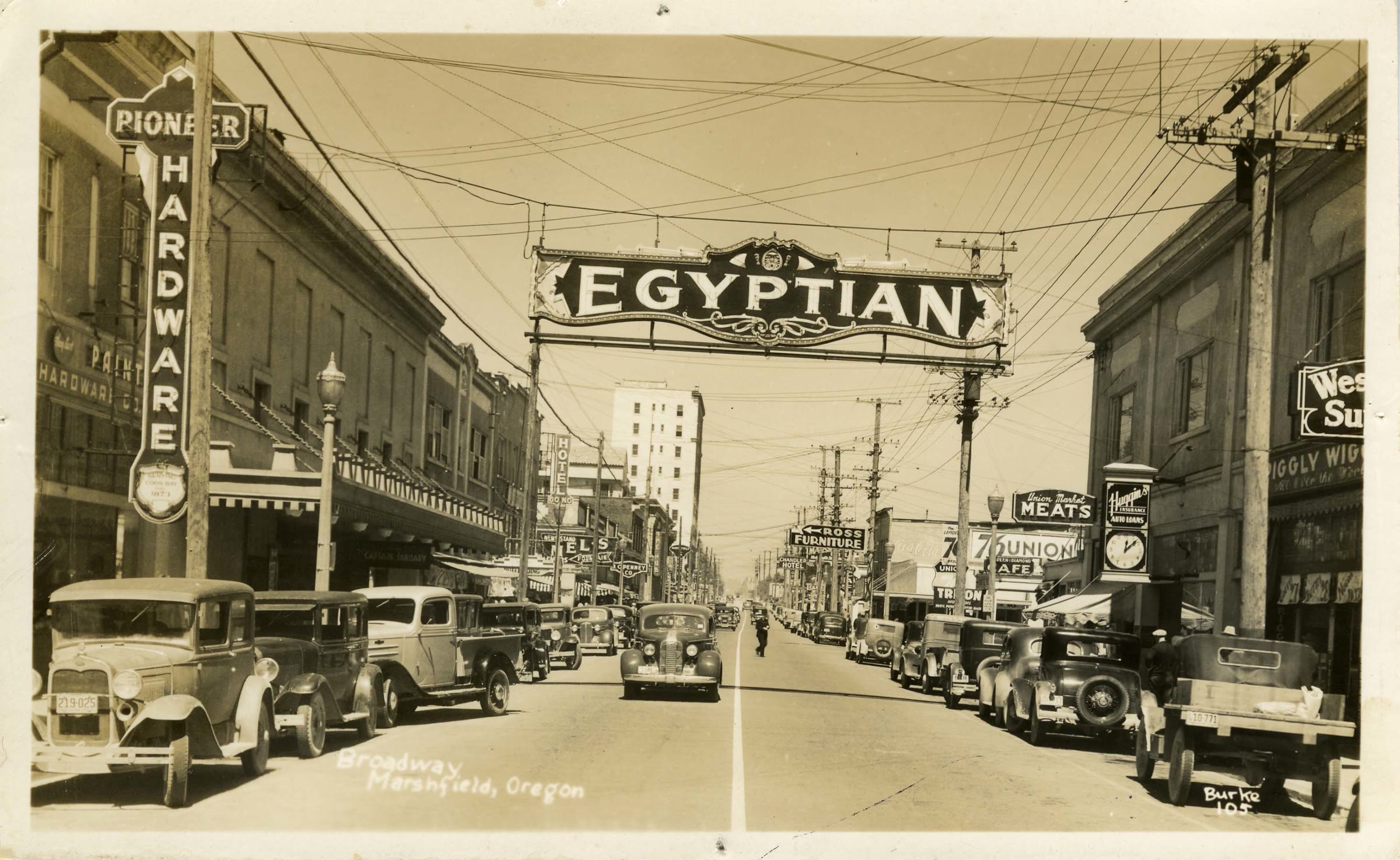
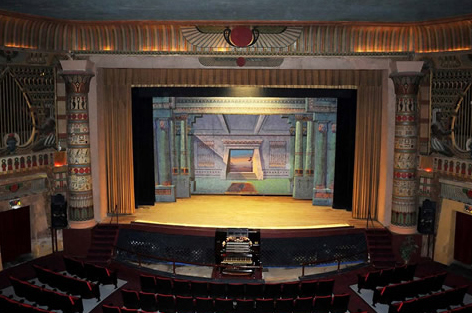
When Howard Carter opened King Tutankhamen’s tomb in 1922, the discovery set off an Egyptian Revival craze that swept through fashion, architecture and, above all, the design of America’s new movie palaces. Only two Egyptian Revival theatres still stand on the West Coast: Grauman’s in Hollywood and Coos Bay’s Egyptian. Of the two, the Egyptian remains largely intact, its columns, hieroglyphics and scenic drop much as audiences first saw them.
The story, year by year
Click any year to open the full story of that era, with photographs.
1922
A garage on Broadway
Built as the Motor Inn Garage and Service Station. That same year, King Tut’s tomb is
discovered, sparking the Egyptian Revival craze that will remake it.
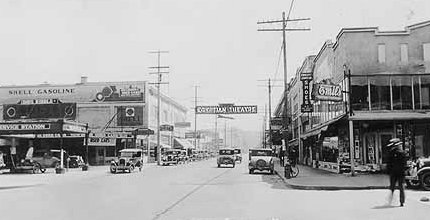
The Egyptian did not begin as a theatre at all. It was built in 1922 as the Motor Inn Garage and Service Station, a product of the building restrictions that lingered after World War I. Only once federal restrictions eased was it transformed into a movie palace.
The timing could not have been better for the style it would wear. The discovery of King Tutankhamen’s tomb in 1922 and the excavation of the Great Hall of Karnak created a public sensation, and American movie-palace design turned away from Renaissance and Baroque toward the exotic Egyptian Revival look. Coos Bay’s new theatre would ride that wave.
A little-known chapter came first. On July 23, 1922, a horrendous fire broke out on Front Street, consuming Marshfield City Hall, downtown businesses and waterfront residences. With its offices in ashes, the City Council leased the new highway garage from its owner, H. Conje Noble (Harry C.), to temporarily house the fire and police departments under a one-year lease, renewable, at $100 a month. A 12′×14′ concrete-and-timber jail was added to the northwest corner for Police Chief Jack Carter’s inmates, complete with barred windows and alley access. The occupants moved into the new city hall just in time for the garage’s transformation to begin.
In 1924 the Coos Bay Amusement Company hired architect Lee Arden Thomas (who also designed Portland’s Bagdad and Oriental Theatres and the Memorial Union Building at Oregon State University) and invested $200,000 in construction. The interior decoration was carried out by B. F. Shearer & Company of Seattle, and the original seating came from the Wakefield Company of Chicago.
1925
The Egyptian opens
The theatre opens in November with Graustark: 1,274 seats and a new $32,000
Wurlitzer filling the house with sound.
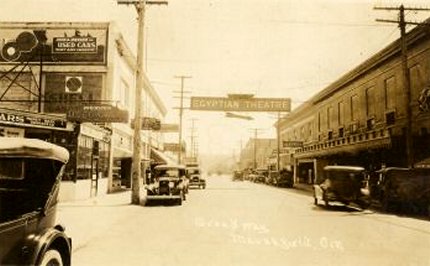
The Egyptian opened in November 1925 with a dinner staged for local luminaries and Hollywood studio representatives, its elegance rivaling the best of Portland’s palaces: the Bagdad, the Aladdin, the Hollywood and the Paramount. Opening night featured Graustark, adapted from the George Barr McCutcheon novel and starring Norma Talmadge and Eugene O’Brien, with pipe-organ accompaniment played on the new Wurlitzer by Rex Stratton.
The house could seat 1,274, and the two-day opening drew 2,250 patrons: a remarkable turnout for a coastal town, and a sign of how hungry the community was for a palace of its own.
1929
The talkies and the golden years
The Home Towners premieres March 6, 1929, bringing talking pictures to Oregon’s
south coast.
By 1928 talking pictures had arrived, and Robert Marsden ordered Movietone and Vitaphone equipment for the Egyptian. George M. Cohan’s The Home Towners, starring Richard Bennett and Doris Kenyon, introduced talkies to local audiences on March 6, 1929, soon followed by The Jazz Singer with Al Jolson. Each show was a full evening: a newsreel, a comedy and filmed vaudeville alongside the feature.
From 1925 to 1949 the Egyptian was the premier entertainment center for Oregon’s south coast, running first-run films under contracts with First National, Paramount, Universal, MGM, Warner Brothers and United Artists, the same pictures playing at the same time as Portland’s palaces. During the Depression a “bank night” cash lottery lured customers through the doors, and ticket prices climbed from ten and thirty-five cents to fifteen and fifty cents. A rival, the Noble Theatre, was about half the size and lacked the movie-palace atmosphere that set the Egyptian apart.
1949
The McSwain family takes over
The Coos Bay Amusement Company sells to Jones Enterprises, and the McSwain family steps in to run
the theatre.
In 1949 the Coos Bay Amusement Company sold to Jones Enterprises of California, and the Stan McSwain family, newly arrived from Oklahoma, took over operations. They remodeled the foyer with a concession stand and replaced the marquee, all done sympathetically to preserve the Egyptian decor. Stan was a showman through and through: he drove a green Volkswagen painted with popcorn kernels and called himself “the popcorn king.”
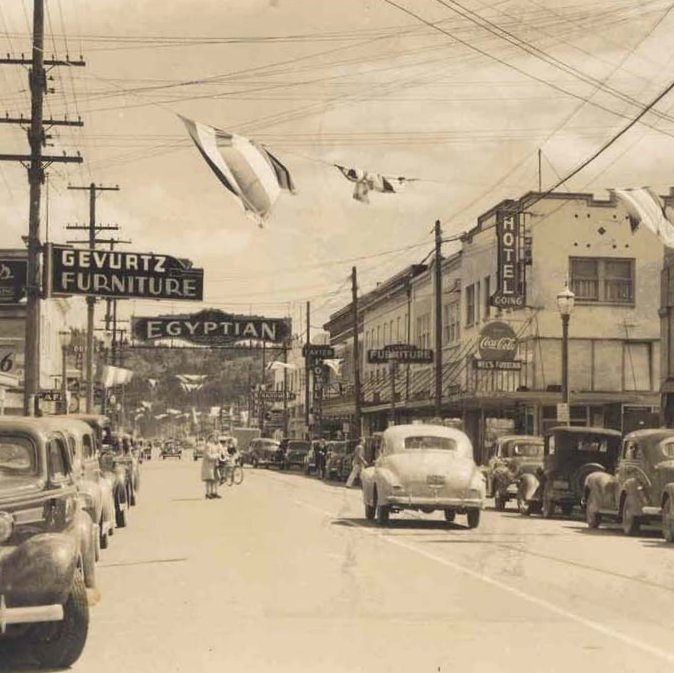
1960
The McSwains buy in
The McSwains become owners; the auditorium’s columns are moved to make room for the wider
CinemaScope screen.
In 1960 the McSwains became the owners outright. As television and two new drive-ins competed for audiences, they adapted the theatre to keep up. To fit the wider CinemaScope screen, the two massive Egyptian columns flanking the stage were moved out onto huge plinths, preserving the proscenium’s decor while enabling wide-screen films.
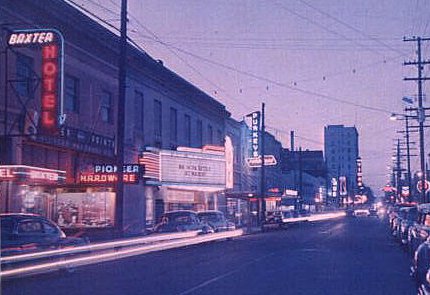
1976
Twin theatres in the balcony
Small “twin” mini-theatres are built into the balcony so three films can play at once.
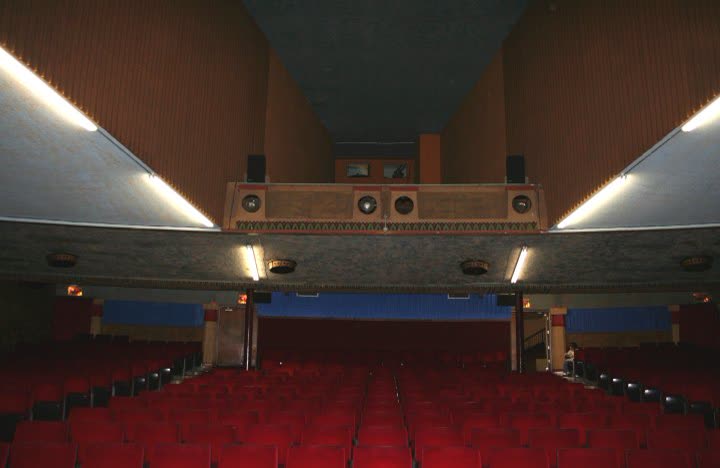
By the mid-1970s, with attendance down, the McSwains built small “twin” theatres at each side of the balcony so three films could play at once, with little effect on the main auditorium below. The change closed the balcony to the public. It would not reopen until the ETPA removed the mini-theatres in 2007.
2005
Decline and closure
Coming Attractions closes the theatre and puts the historic building up for sale.
Beginning in 1982 the theatre changed hands several times. Some improvements were made (new seating among them), but the building suffered from deferred maintenance, roof leaks and high water. Remarkably, through it all the decor survived. After a multiplex opened nearby in 2005, the then-owner, Coming Attractions, removed its equipment and closed the theatre in November 2005, putting the historic building up for sale.
2006
The rescue begins
The City of Coos Bay Urban Renewal Agency buys the building on April 1 and, on July 21,
contracts the all-volunteer ETPA to run it.
The City of Coos Bay Urban Renewal Agency purchased the historic building on April 1, 2006, and on July 21 contracted with the all-volunteer 501(c)(3) Egyptian Theatre Preservation Association (ETPA) to manage it: showing classic, art and educational films and hosting concerts, fundraisers, meetings, celebrations and free events, including the free Christmas concert offered since the 1970s.
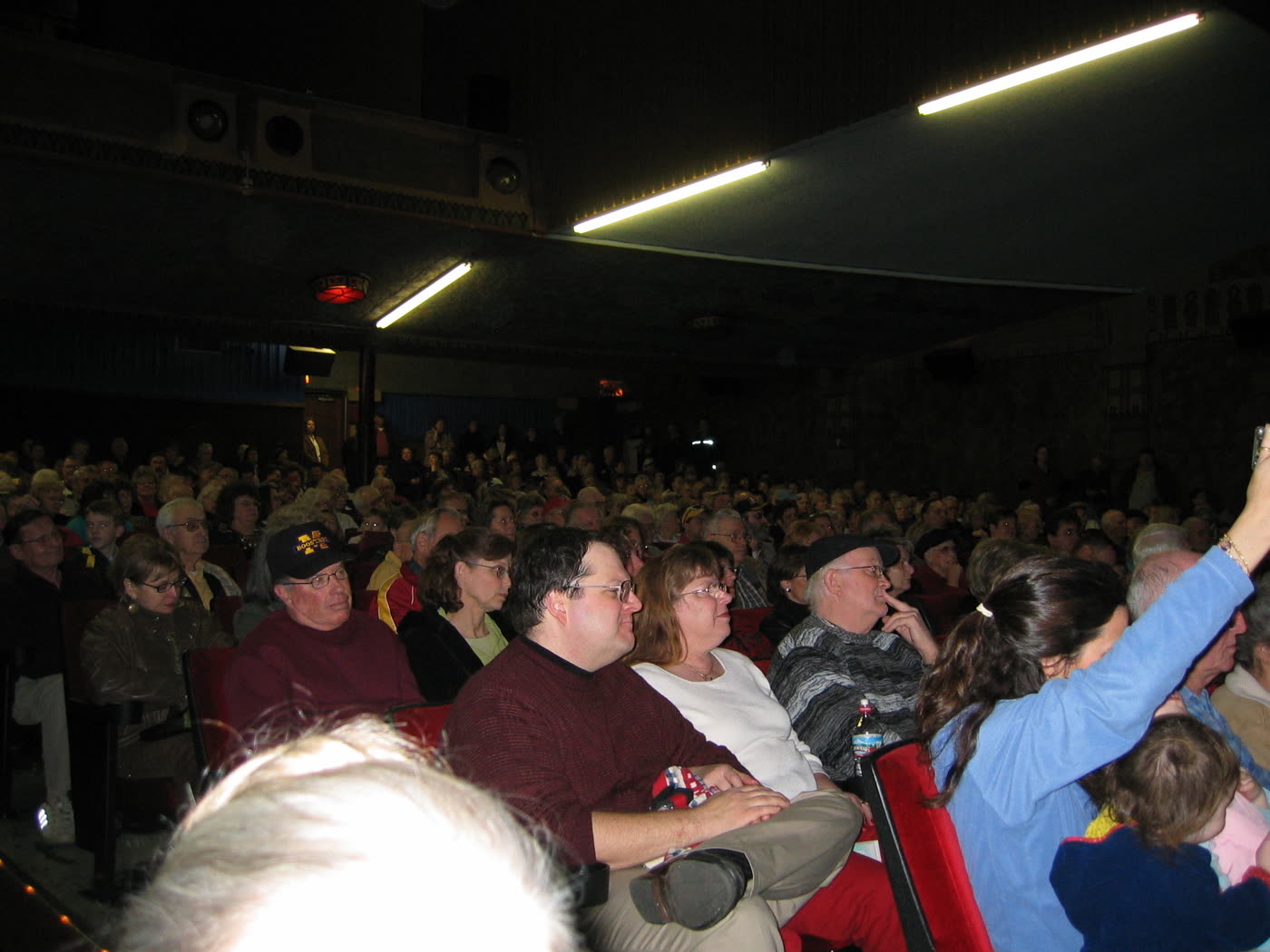
These views show the theatre in the years before the 2007–2014 restoration returned the auditorium and balcony to their original configuration:
2010
A national landmark
Listed on the National Register of Historic Places on May 24, the same year engineers
find the back wall is sinking.
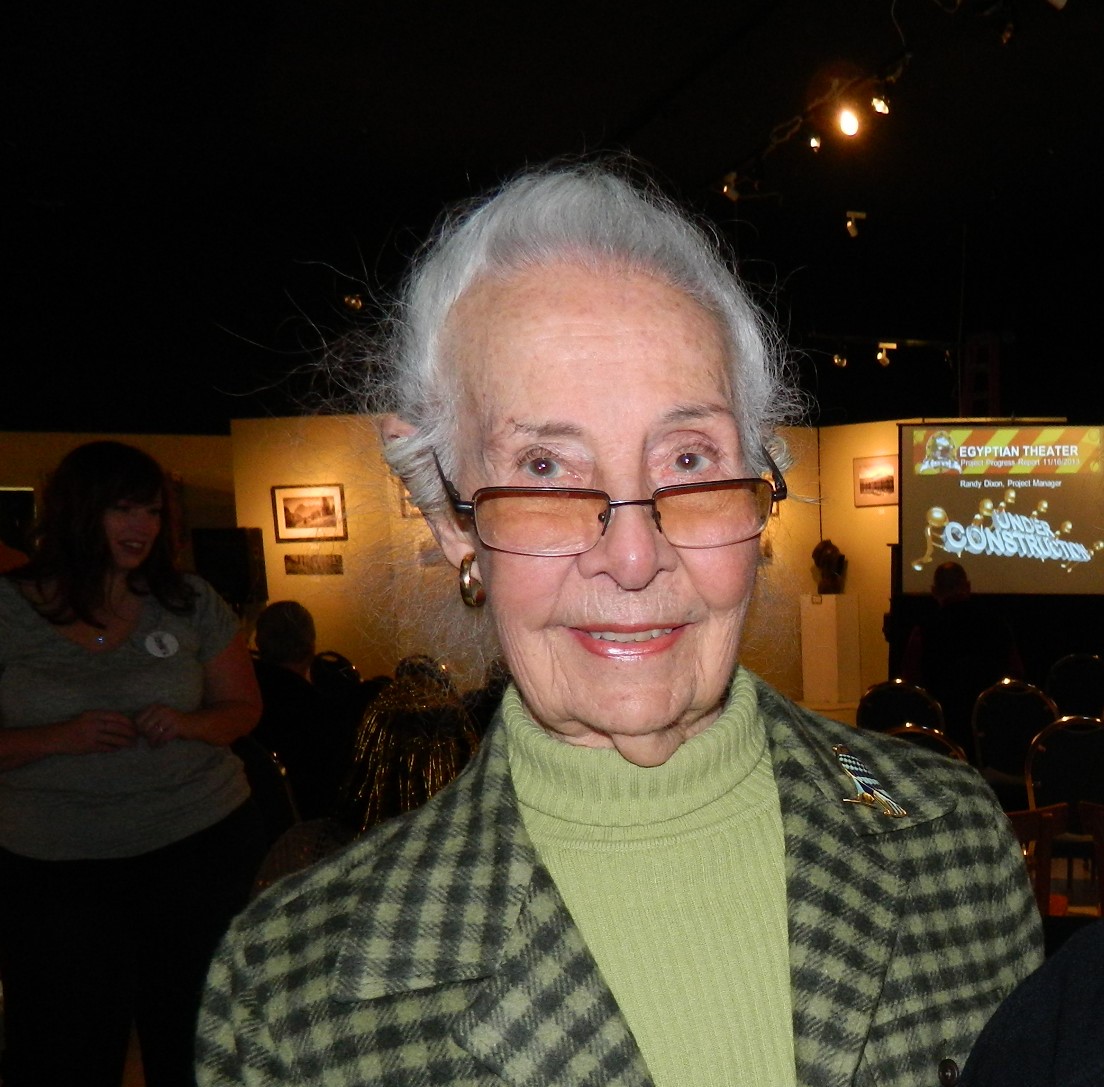
From 2007 to 2010 the ETPA made numerous repairs. A modern natural-gas heating system was installed, funded by a generous Coquille Tribal Community Fund grant, and the balcony mini-theatres were removed, reopening the balcony in time for the 2007 Sounds of Music Christmas Concert. Thanks to the work of volunteer Helen Doving, the Egyptian was entered on the National Register of Historic Places on May 24, 2010.
The structural crisis that followed (the discovery that the back wall was sinking, and the campaign to save the building) is told in full on the restoration page. To walk the building for yourself, room by room, take the self-guided tour.
2014
Reopened and restored
After a $1.3 million campaign, the Egyptian reopens in June.
The reopened theatre had new roofing and drainage, updated electrical service and new main-floor ADA-accessible restrooms. The ETPA hired Kara Long as its first Executive Director to lead the Egyptian’s next chapter. Read the full restoration story →
2025
One hundred years
The Egyptian marks its 100th birthday, still showing films and still filled with music.
The community celebrated with antique cars on Broadway, the hand-painted scenic drops on display, and organists filling the house with 1920s tunes on the Mighty Wurlitzer, including live accompaniment for a screening of the 1927 silent film Sugar Daddies. Guests capped the night with a “Walk Down Memory Lane,” sharing their own memories of the Egyptian.
This history has been researched and compiled over many years by ETPA volunteers and historians, with special thanks to the theatre’s historian, Helen Doving. We are grateful to everyone who has gathered the records, photographs and memories that keep the Egyptian’s first century alive for the next one.
Help write the next chapter
A hundred years in, the Egyptian’s story is still being written by the volunteers, members and donors who keep the doors open and the lights on. Your support carries this landmark into its second century.