Restoration & Preservation
Restoring a Movie Palace
Coos Bay was once a marsh (the town was even called Marshfield), and the Egyptian sits on fill dirt. Over the decades, that ground gave way beneath it, and by 2010 the theatre that had anchored Broadway since 1925 was quietly in trouble.
The building was sinking
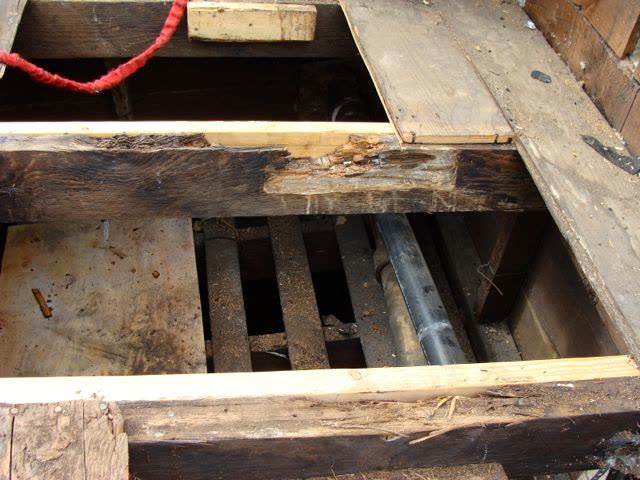
Because much of Coos Bay was once a marsh, the theatre rests on fill dirt rather than solid ground. Over the decades the back wall tilted outward and the stage floor sloped backward: the back is now about 14 inches lower than the front. In 2010 the City retained an engineering firm to identify, estimate, and prioritize restoration work. The engineers discovered that the back wall had been sinking and that the Egyptian needed significant structural repairs to be safe for patrons. In early 2011, with the engineer’s report in hand, the City decided the theatre had to close until the repairs could be done.
A community campaign
Over 2011 the City and the ETPA studied what was needed and devised a fundraising plan. The ETPA reorganized to focus on the task and, with the City’s help, retained key experts: George Kramer, noted preservationist and past chair of the Oregon Preservation Commission; Herb Stratford, owner of Historic Theatre Consultants and a board member of the League of Historic American Theatres; and Rich Foster, principal of Cascadia Consulting Partnership, who designed the capital campaign and the grant-funding strategy.
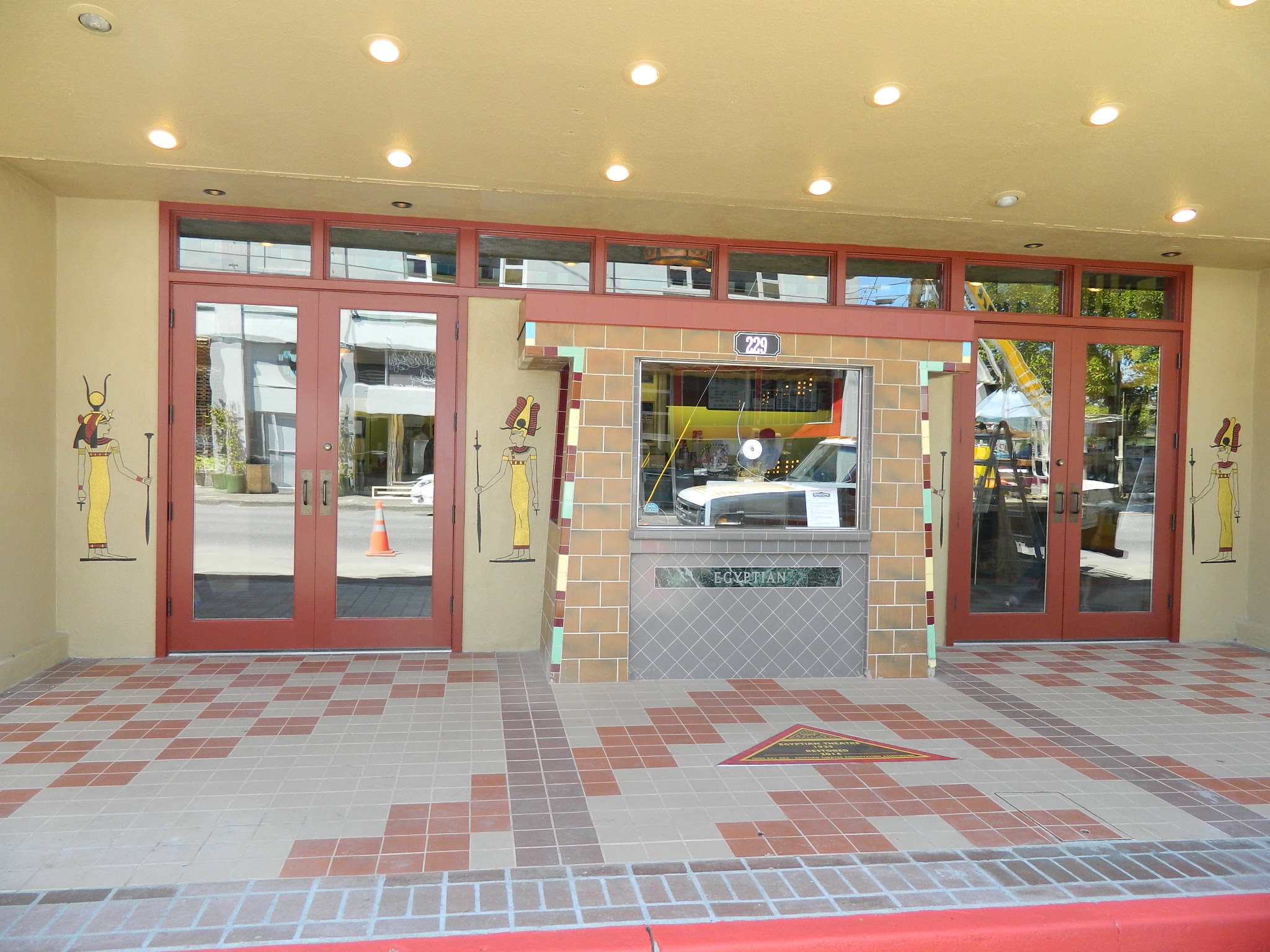
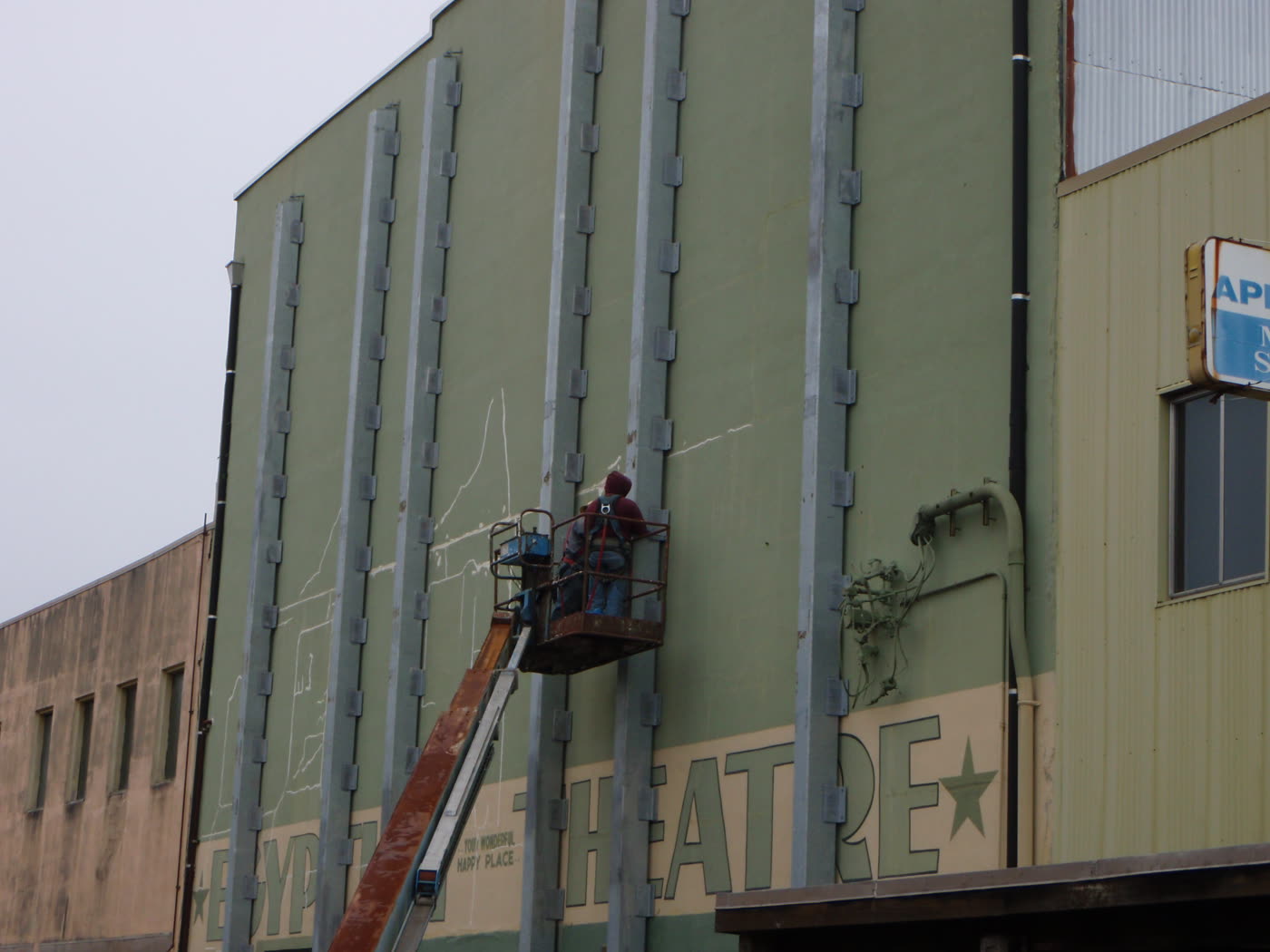
From 2013 through 2015 the ETPA raised over $1,300,000, enough to make the structural repairs, restore the Egyptian’s Broadway facade, and undertake other high-priority preservation work. As part of the 2013 renovation, steel helical coil piles were driven 140 feet down to bedrock to stabilize the back wall. They can still be seen from the alley behind the theatre.
The work behind the walls
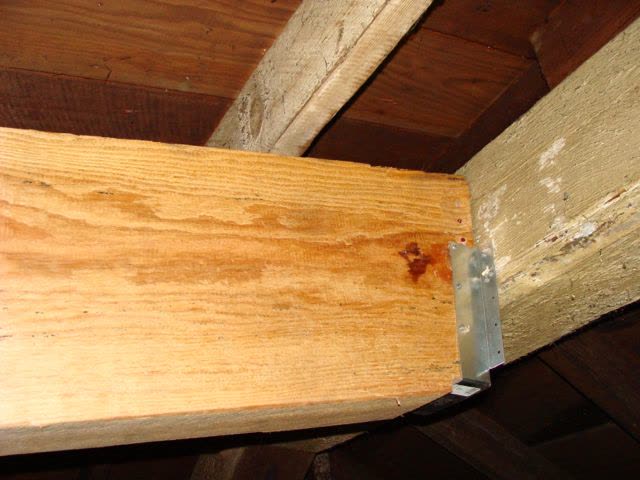
Stabilizing a century-old building on fill dirt meant new steel, new framing, and a new roof, most of it hidden again once the doors reopened.
Reopening, June 2014
In June 2014 the theatre reopened with its structural issues fully addressed, new roofing and drainage, enhanced electrical service, new main-floor ADA-compliant restrooms, the Broadway facade restoration well underway, and an experienced Executive Director and Theatre Manager, Kara Long, hired to take the Egyptian to the next level.
The ETPA had started that work earlier. From 2007 to 2010 it made numerous repairs, including a modern natural-gas heating system funded by a Coquille Tribal Community Fund grant and the removal of the balcony mini-theatres. Thanks to volunteer Helen Doving, the Egyptian was listed on the National Register of Historic Places on May 24, 2010.
The threat of losing the theatre showed how closely the lives of Coos Bay-area residents and the Egyptian are woven together. During the closure, residents told story after story of their experiences there: first dates, first films, whole childhoods measured out in Saturday matinees. Their support made clear that this cherished, authentic home would not be lost.
Sound & light upgrades, 2024–2025
Restoration covers more than plaster and piles. In the last two years, grants and community donations have let the ETPA modernize the Egyptian’s sound and stage lighting for the first time in decades, proof of what the next phase of restoration can accomplish with the community’s support.
A new sound system
The Egyptian’s house sound now runs on a digital rig: a Behringer X32 digital mixer and S32 digital stage box, feeding a full set of new powered speakers, subwoofers, and monitors. It replaced an aging analog system that had reached the end of its useful life.
New stage lighting, phase by phase
The ETPA is completing the lighting upgrade in phases. The first phase replaced the theatre’s original hand-thrown lever switchboard (the one you can still see backstage on the self-guided tour) with a modern lighting control and DMX network, along with conventional stage fixtures and dimmer packs. The current phase is replacing the theatre’s remaining aging halogen fixtures with energy-efficient LED fixtures, funded in part by grants from the Autzen Foundation and the Oregon Community Foundation, together with community donations.
More than 45 volunteers helped with productions, education events, and capital projects at the Egyptian in 2024 alone, many of them behind this very upgrade.
The next phase of restoration
The 2014 reopening saved the Egyptian, but it did not finish the job. The ETPA has identified six major capital projects to carry the theatre through its next century: each one a significant investment that will take real fundraising and real community support to complete.
Sealing the back wall
The 2013 helical piles and steel strongbacks fully resolved the structural settlement that once threatened the building. Today the concrete back wall still lets water leak through during heavy weather, and sealing it is next.
Finishing the balcony’s restoration
The 1976 mini-theatres came out in 2007 and reopened the balcony to the public, but its decor, seating, and finishes still need the same care the main floor already received.
Upgrading the rigging
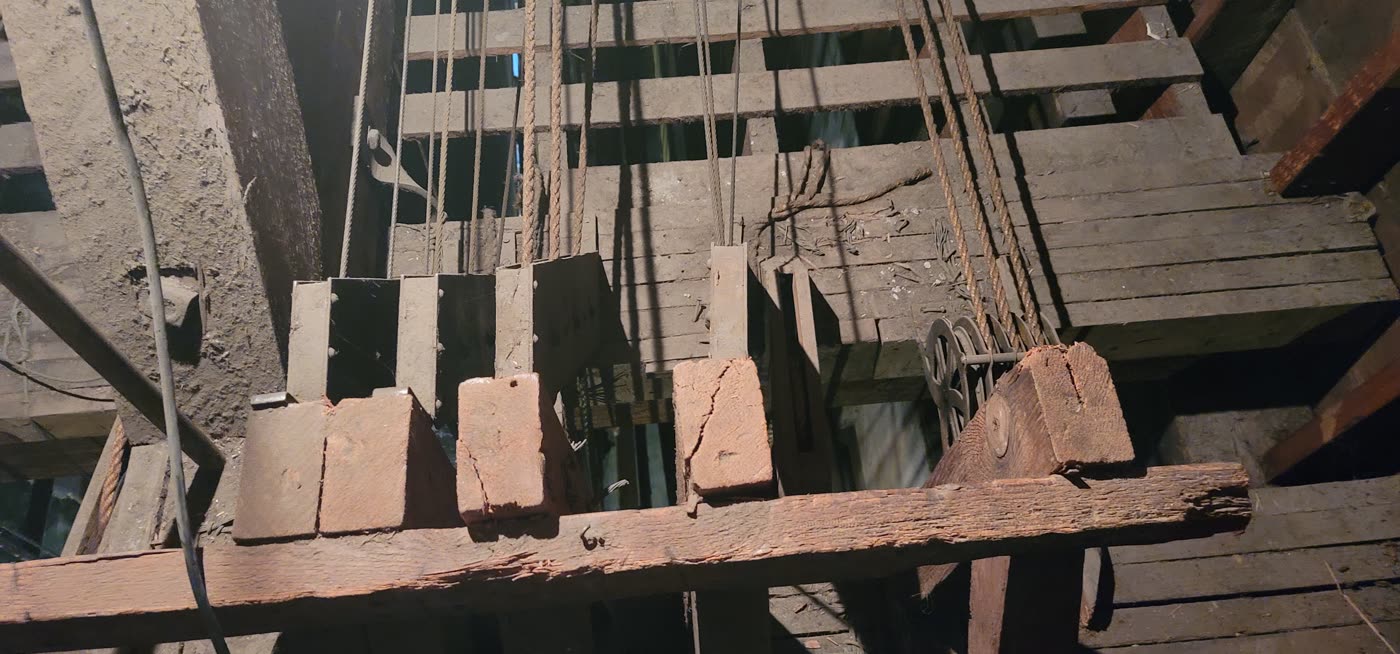
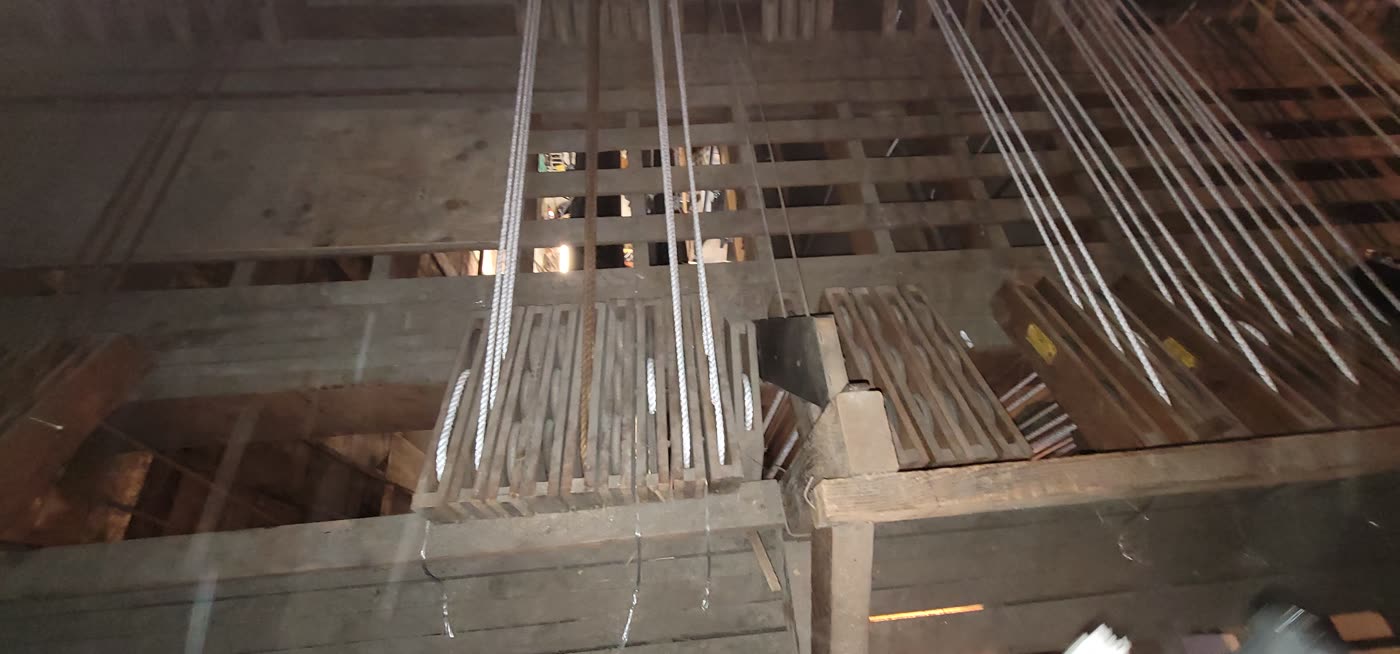
A 2025 structural evaluation found the century-old fly-loft rigging in good condition, and mapped out the reinforcement needed to safely increase capacity on key rigging points for modern productions and touring shows.
Leveling the stage
The historic settlement that the 2013 piles arrested left the stage floor sloping, about 14 inches lower at the back than the front. Leveling it is essential for performer safety and modern staging, but it’s on hold until the back wall is sealed: the two projects have to happen in order.
Backstage facilities for performers
Touring artists, local performers, and students currently have no dedicated backstage restroom or dressing area. Adding both would bring the Egyptian up to the standard performers expect.
Preserving the Mighty Wurlitzer
The 1925 organ still plays, but its pipes, chambers, and mechanisms need specialist conservation to keep it in voice for another century. Meet the Wurlitzer →
Help fund the next phase
These six projects are the ETPA’s current capital priorities. Gifts and memberships move them forward.
Smaller, ongoing care
Alongside those six major projects, a 100-year-old building needs smaller upkeep too: the big gold main curtain is stained and torn and due for replacement (the original is believed to have been red velvet), and volunteers maintain the six hand-painted scenic drops in the fly-loft. In 2016 a drop rope broke with no injuries, and in 2019 board members and volunteers restrung the ropes, added aircraft cable to the counterweights, and hung new legs.
Want the fuller picture? Read the theatre’s full history, or take the self-guided tour to see the details up close.
Preservation takes all of us
The Egyptian stays beautiful and open because a community of donors, members, and volunteers keeps investing in it, year after year. Your gift and your membership go directly toward that work.