
Visit
A Self-Guided Tour
Welcome to the Egyptian Theatre. What began as a grand Egyptian Revival picture palace is today a working community gathering place, and much of the original 1925 magic is still here to see. The theatre once seated 1,274; after a century of changes it now seats 720. There is no roped-off museum here. Guests walk these same rooms during films, concerts, and events, so use this guide to notice the details most people pass right by.
The Lobby
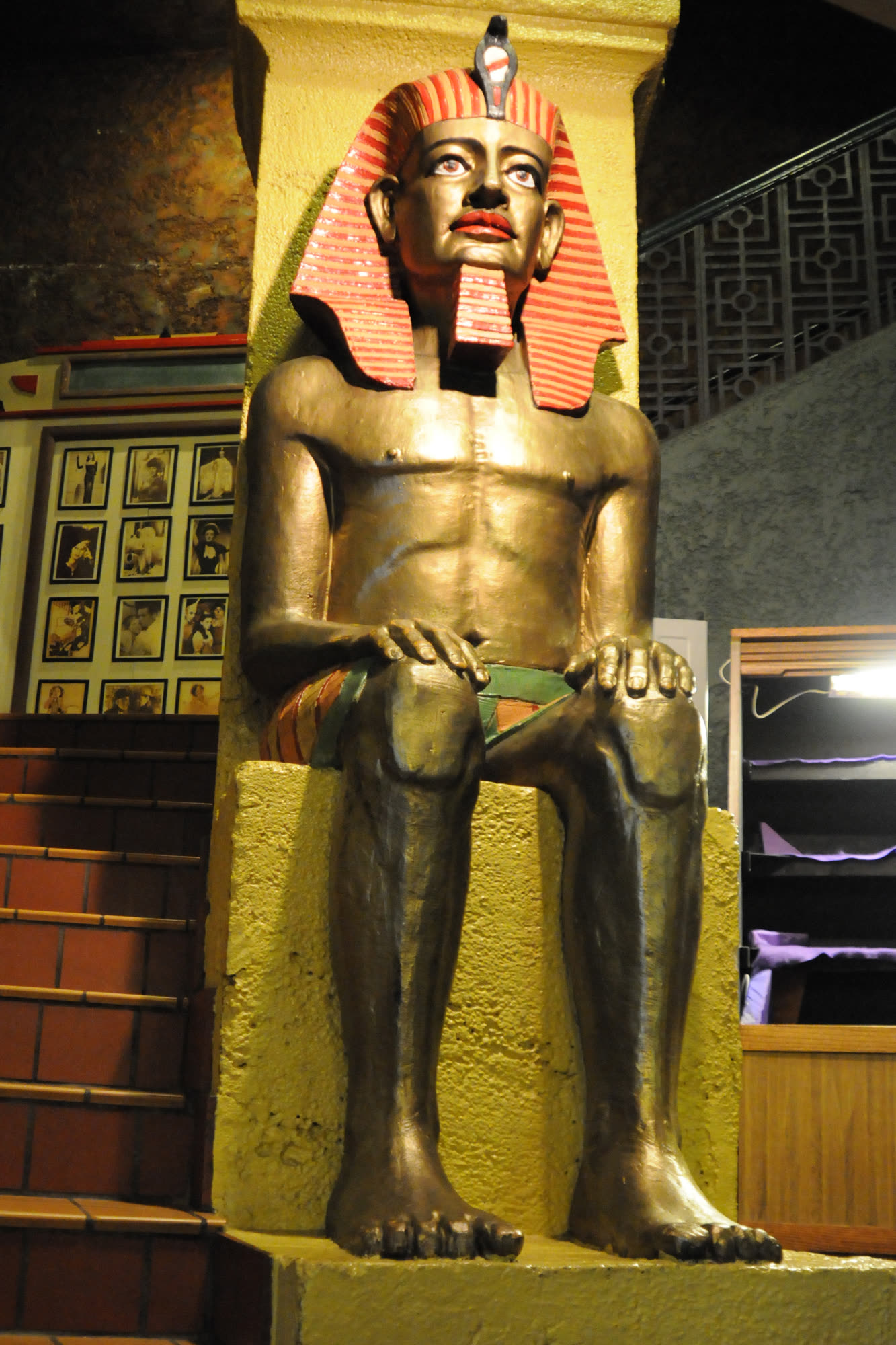
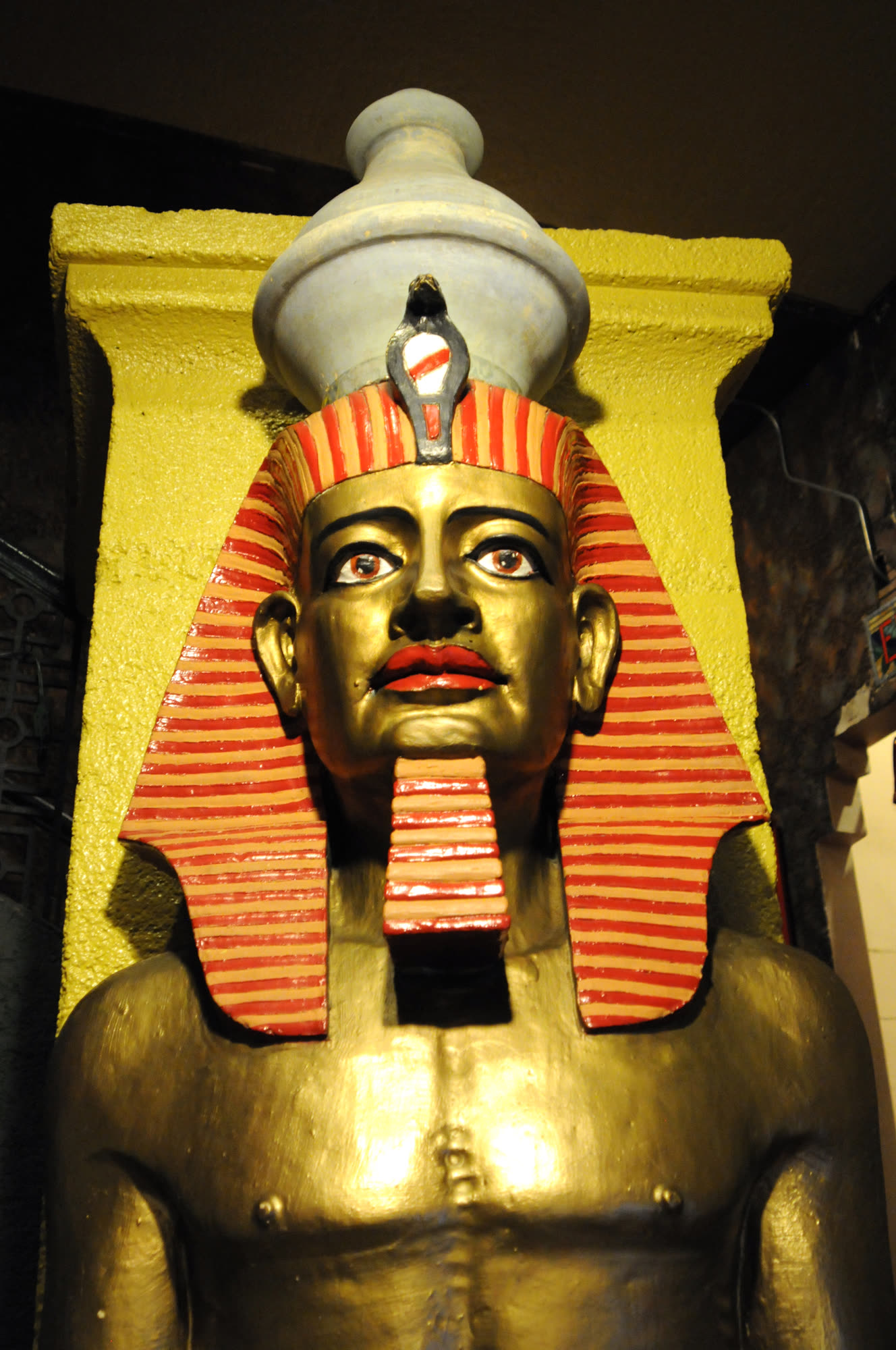
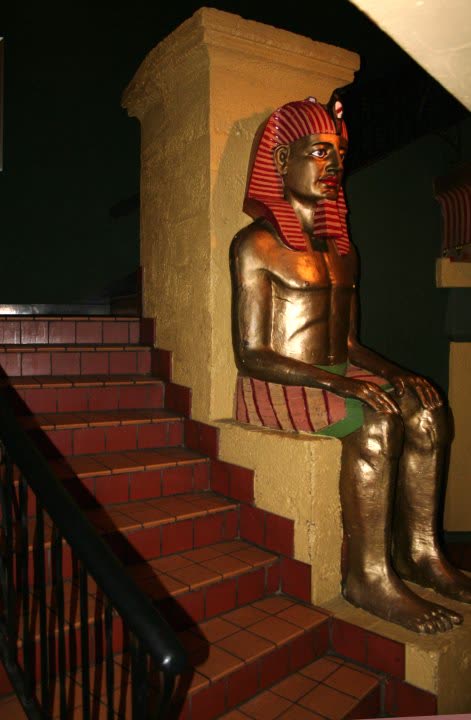
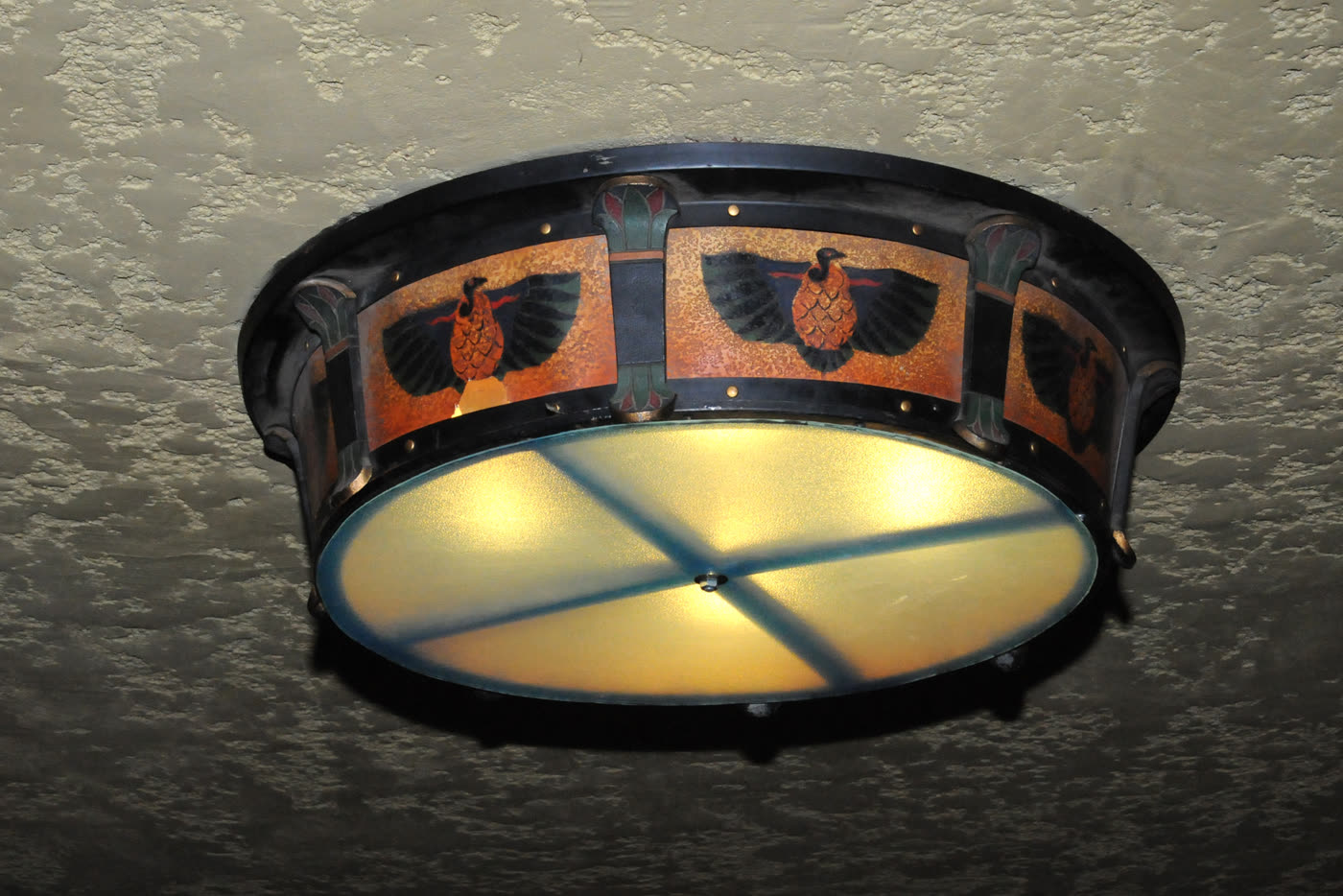
As originally built, there was no concession stand intruding on the fantasyland that architect Lee Arden Thomas and designer Carl Berg created. The Egyptianesque lobby is guarded by two eight-foot bronze-colored pharaoh statues, seated on thrones at the foot of each staircase, a pleasant spot to see and be seen between movies. Look at the front-door handles: their design was taken from the ceiling lights, a motif original to the 1925 building.
The concession stand and the enclosed lobby did not exist until 1949; the original lobby was open to the street. The box office is in its original location. Note the call box with punch buttons, instead of a dial, once used to call the manager upstairs.
While the McSwains owned the theatre, the pharaohs were nicknamed for the McSwain brothers: Foster on the right and Stanley on the left. Both statues originally wore urns on their heads. When the theatre reopened in 2014, volunteers found both vases missing. One later turned up at a garage sale and was returned, but the other is still lost. Overhead at the entrance, the words “Through These Doors Walk the Most Wonderful People” are believed to have been installed by the McSwains in the 1960s.
The unisex, fully accessible restrooms beside the auditorium doors were added in 2013 (the last two rows of seats were removed to make room) just before the 2014 grand reopening.
The Mezzanine
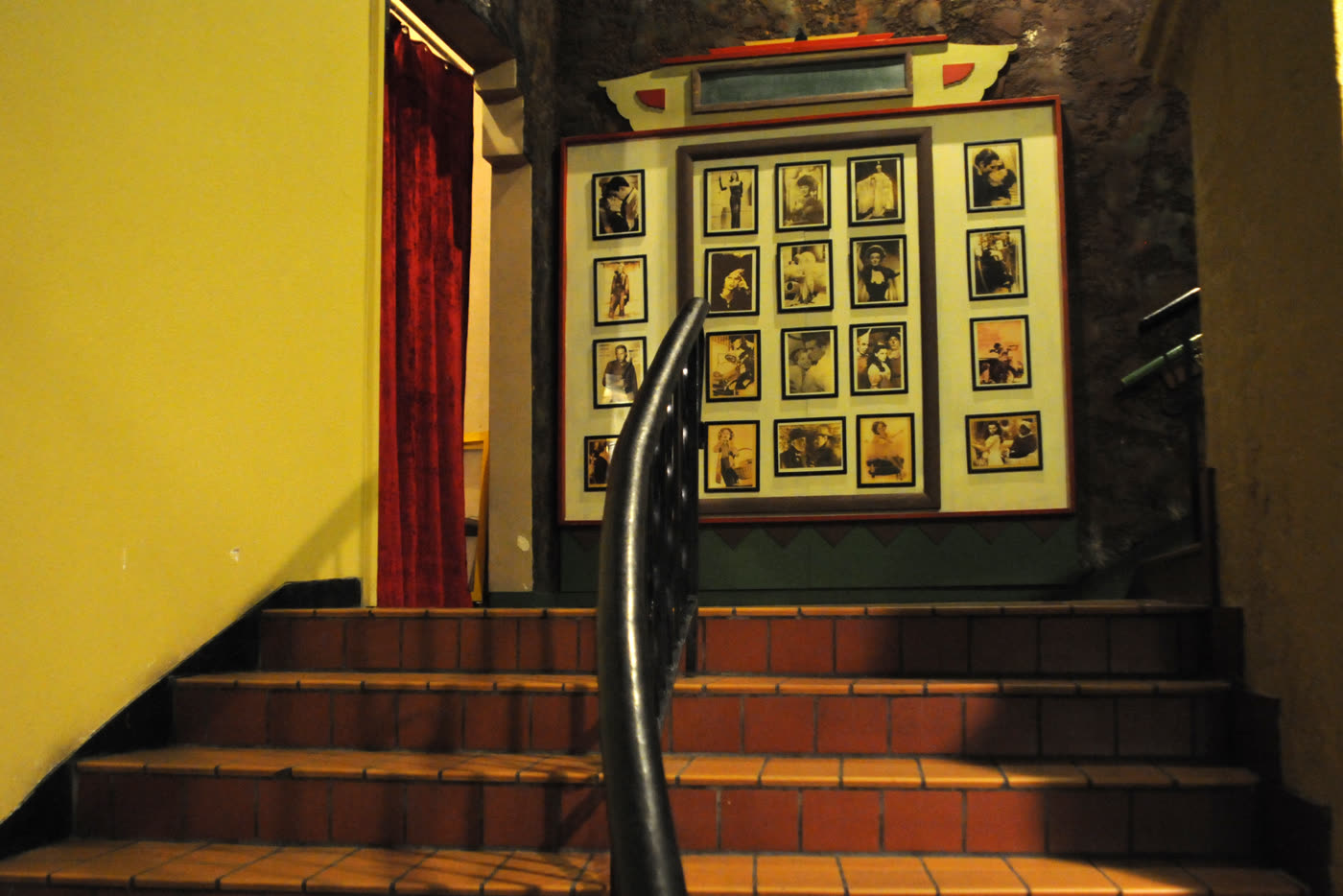
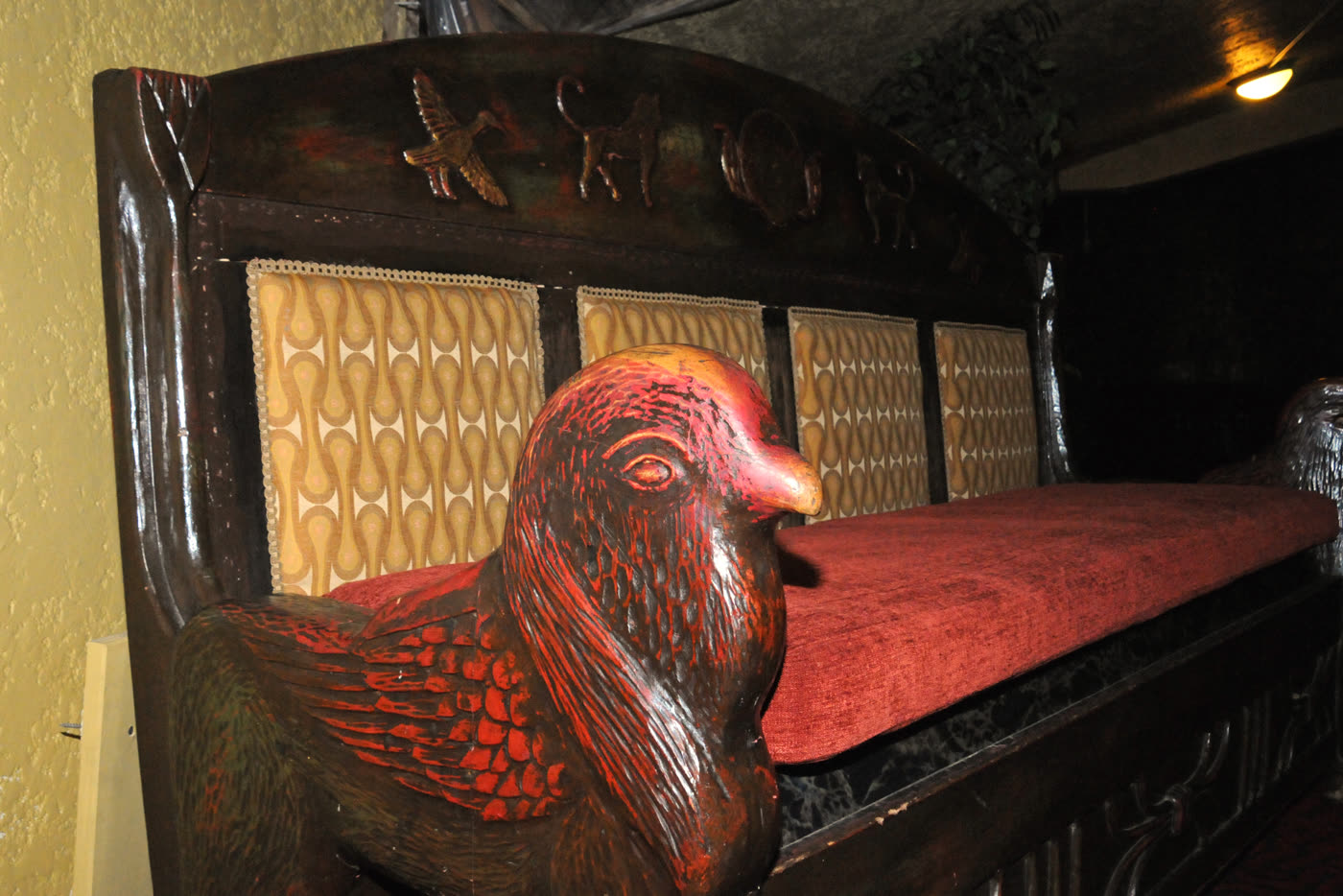
Going up the stairs, you pass black-and-white photos of actors and actresses. These walls once held local high-school football team photos, since returned to the schools. The marble sofa and the Egyptian-themed chairs on the mezzanine are original to the theatre. Until 2014, the two mezzanine restrooms were the only public ones in the building.
The Balcony
The balcony seats 255. At the top of the south staircase, the first chair on the right, overlooking the staircase, is original. Note the ashtray holder in the arm instead of a cup holder. The front row of the center balcony shows a sample of the chairs used over the years; the plush chairs installed in the early years carried a 10-cent surcharge to “sit in style.”
Look up to see the remnants of the 1976 “mini” theatres. In the back corners were “cry rooms”: glass-fronted rooms with piped-in audio where a parent could take a crying baby (and later a favorite teenage hangout). They were removed when the minis were installed.
The Projection Room
Watch your step. Built as a single room, the projection booth was divided into three in 1976 and returned to one room in 2007. Highly flammable nitrate film was used in the 1930s through the 1950s, and the carbon-arc projector made fire a real danger, so the projectionist stayed the whole time. A string ran across the top of the projector to shutters on the windows. If it burned through, the shutters dropped to slow a fire and let patrons escape.
A 35mm projector arrived in the 1960s and was still in place when the ETPA began operating. It was disassembled in 2016 for a new 4K digital projector, though the 35mm projector and its film platters remain in the north end of the room. The tiny bathroom was for the projectionist, who wasn’t supposed to leave during a movie.
The Auditorium
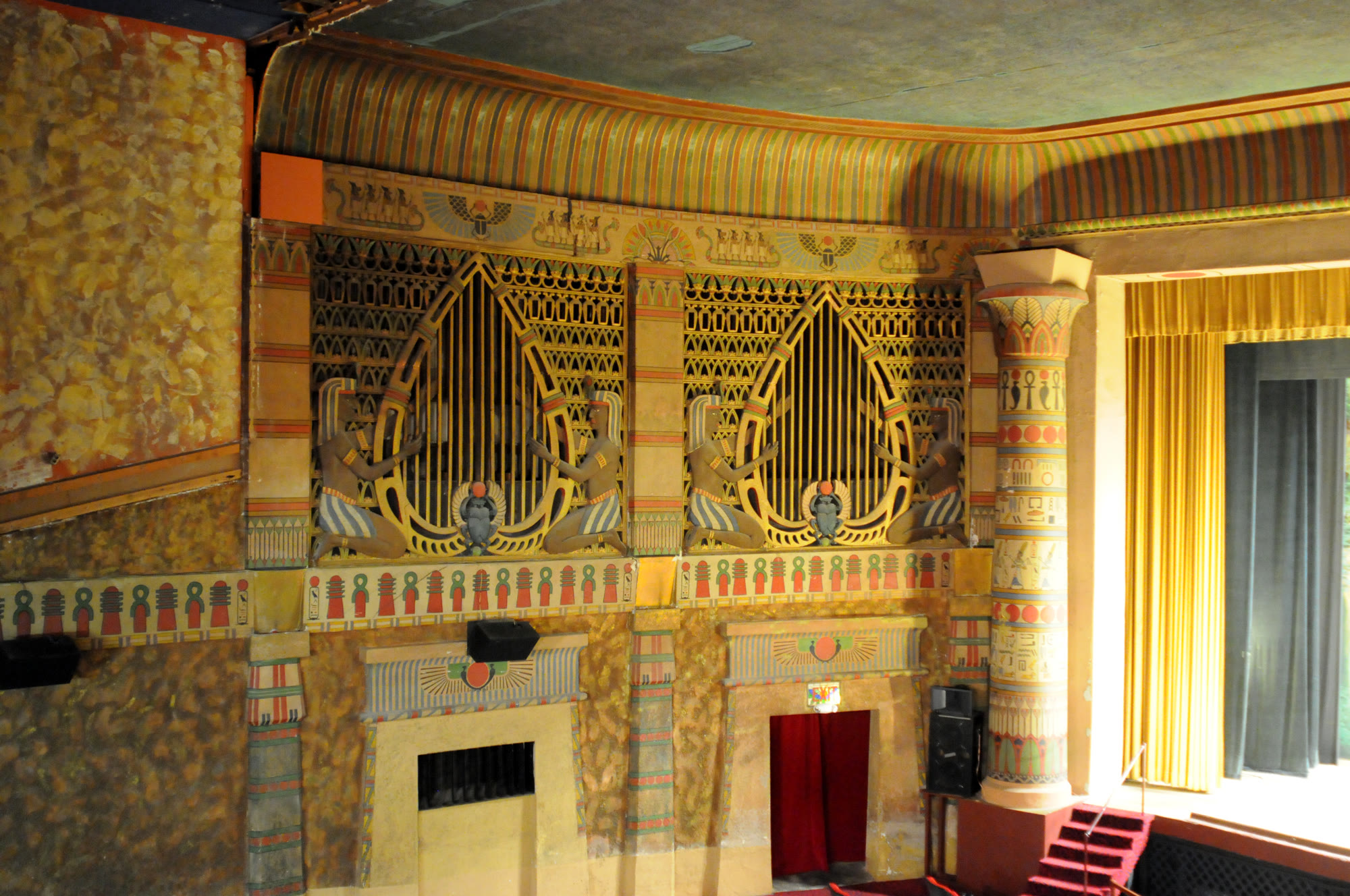
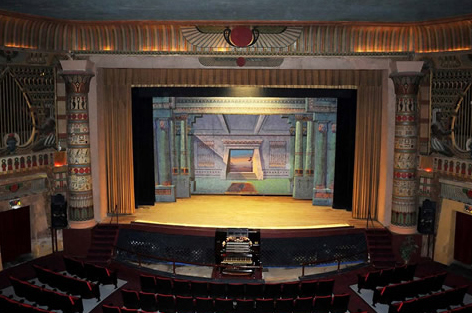
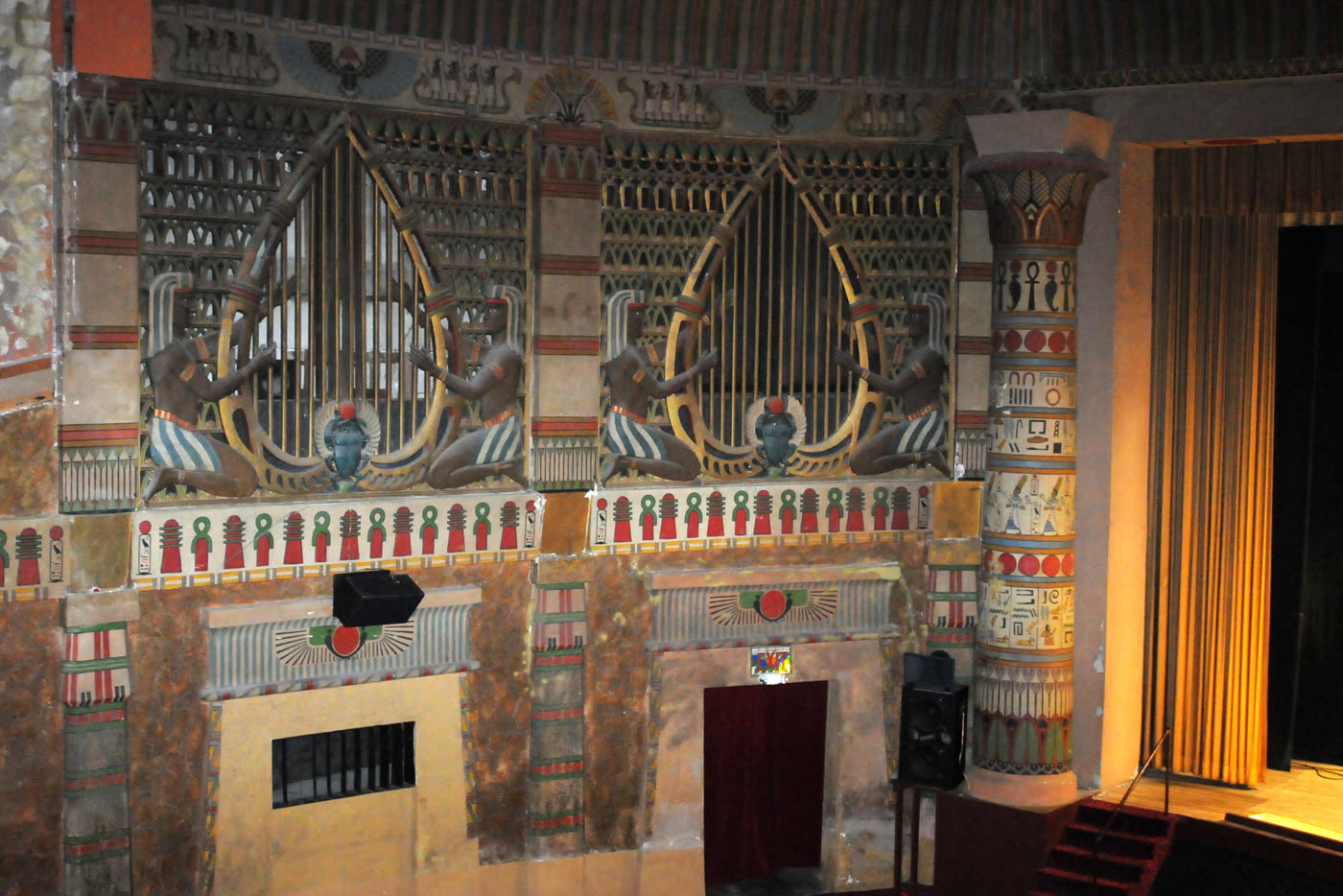
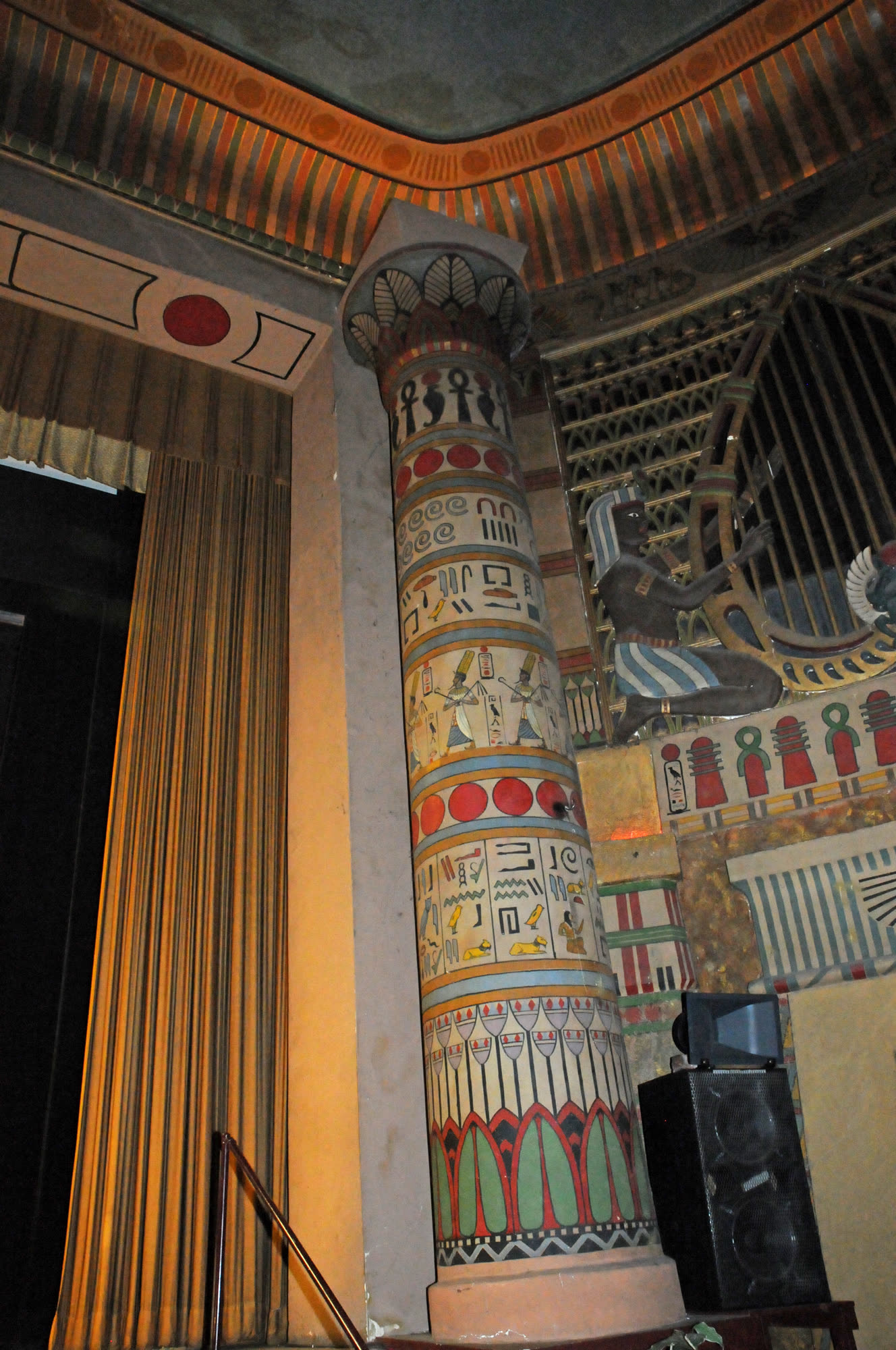
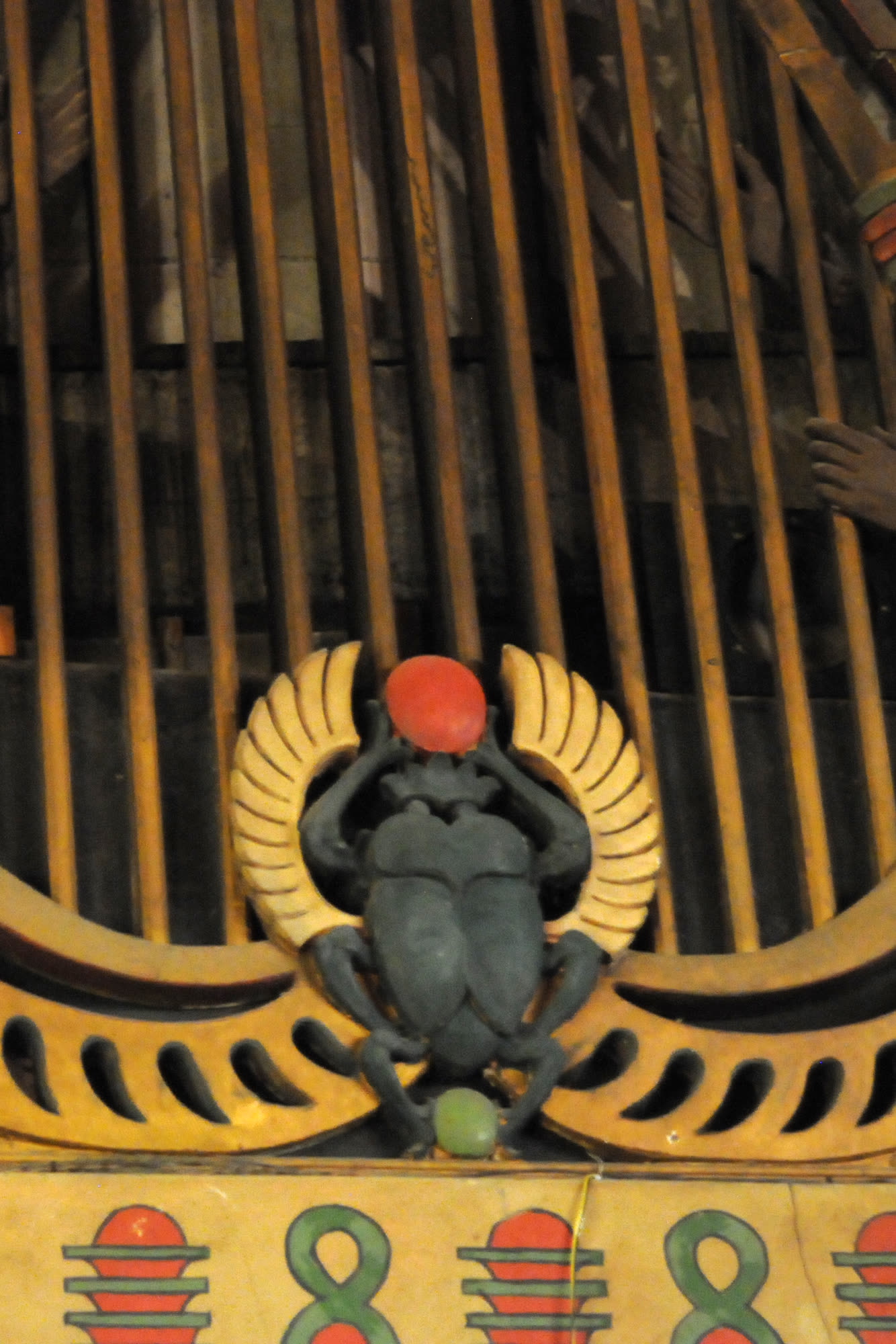
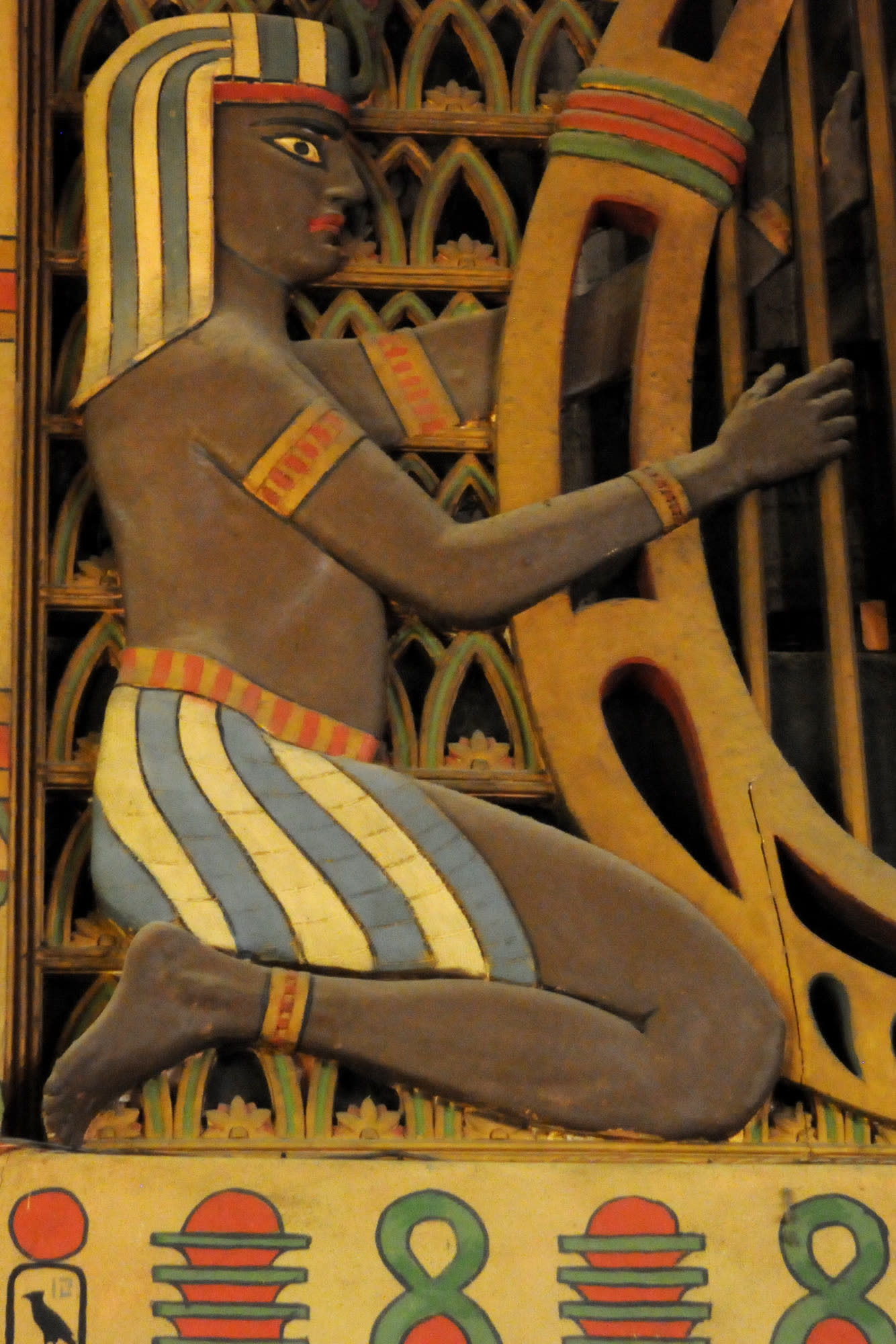
The rear ceiling (once seating about 800, now 420) carries six drum-shaped lights of papyrus decorated with winged scarabs, encased in wrought iron with snake heads rearing on the sides. The organ lofts are disguised as kneeling servants on either side of huge lyres set against lacy openwork, echoing a photograph of a doorway to King Tutankhamen’s tomb flanked by guardian statues. Above the organ screens, a painted frieze shows winged scarabs holding sun discs, with a funeral barge and animal-headed deities.
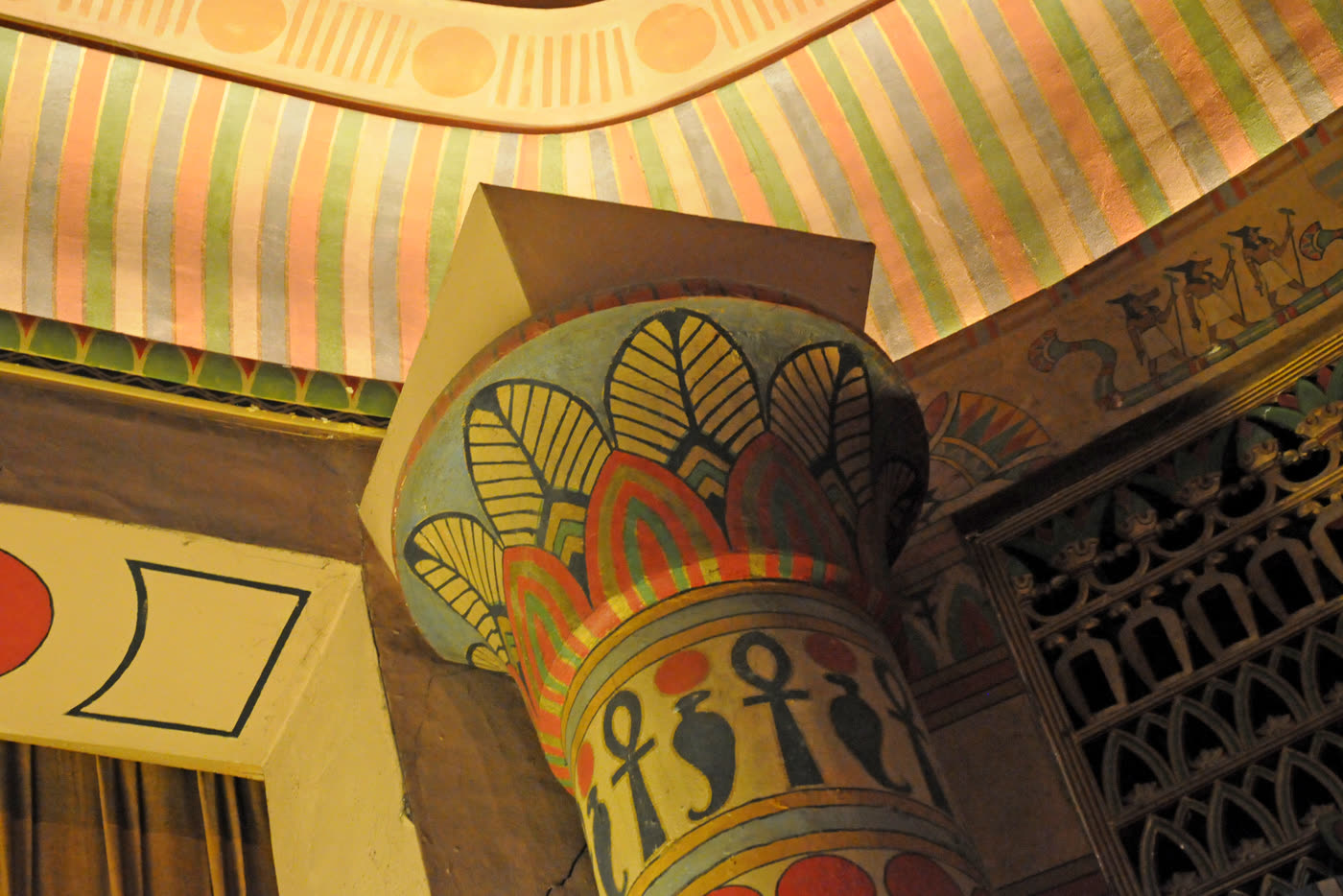
The original Wurlitzer Hope-Jones Unit Orchestra organ sits intact at center front and is still in regular use. The proscenium arch above the stage bears a replica ancient Egyptian temple crowned by a winged Horus disc. Giant columns flank the stage, banded with hieroglyphics, lotus, royally garbed striding figures, papyrus and geometric patterns; the images are said to represent real words, though not authentic phrases. In 1960, to fit CinemaScope, Stan McSwain had the two massive columns moved out onto huge plinths, preserving the proscenium decor while enabling wide-screen films.
Egyptian Revival details
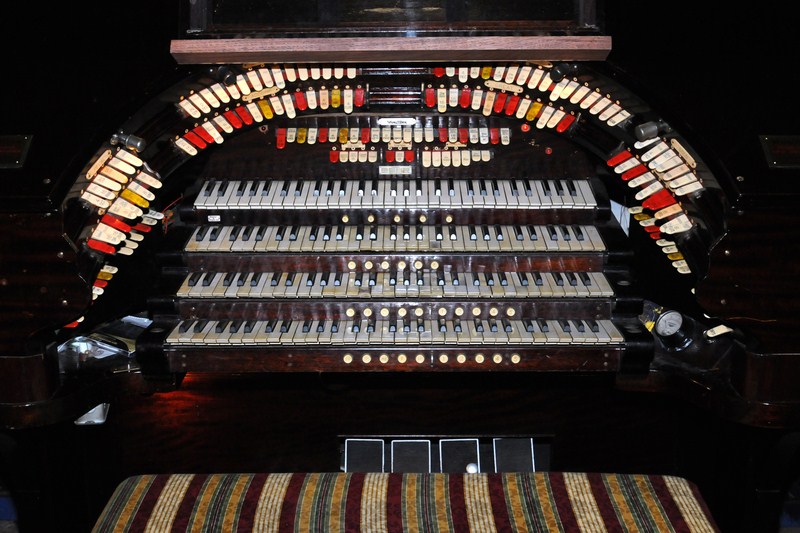
The Mighty Wurlitzer
One of the theatre’s most notable features is the 1925 Wurlitzer Hope-Jones Unit Orchestra organ, still intact and playable at center front. In the summer months it is played on Wednesdays between noon and 1:00.
There is far more to hear and see: the pipes, the percussion, and the people who keep it in voice.
Read the full Wurlitzer story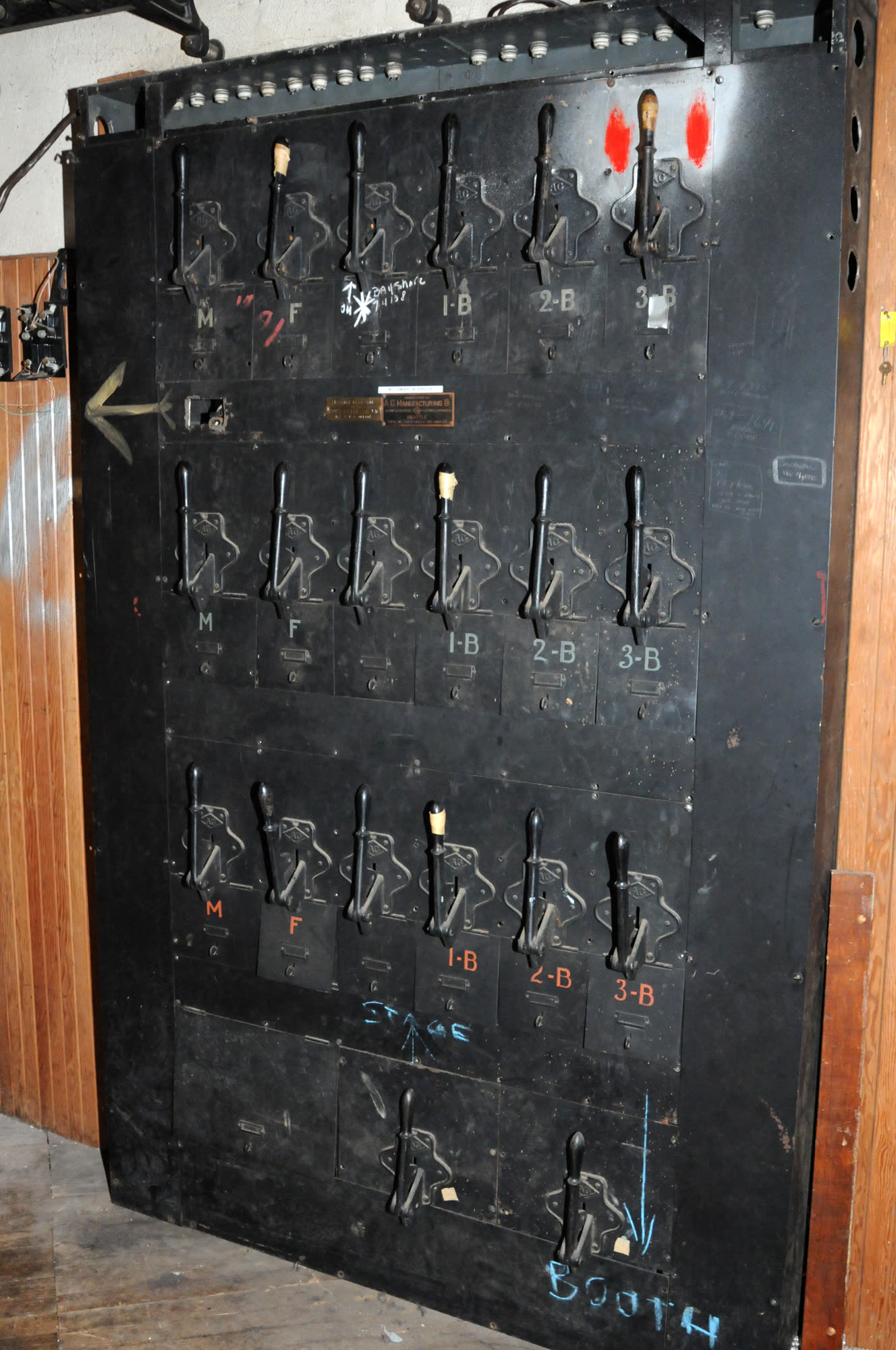
Backstage
Backstage is not open without a guide. The stage floor is the original 1925 hardwood. Because much of Coos Bay was once a marsh (the town was named Marshfield), the building sits on fill dirt, and the back wall once settled into it. In the 2013 renovation, steel helical coil piles were driven 140 feet to bedrock, fully resolving the structural issue; you can still see the piles from the alley behind the theatre. Two things remain on the ETPA’s list, in order: sealing water that still leaks through the concrete back wall, then leveling the stage floor the old settlement left behind: about 14 inches lower at the back than the front.
This vintage lever switchboard once controlled the house and stage lighting circuits by hand. It is a relic of a very different era from the digital lighting and sound systems now running the show.
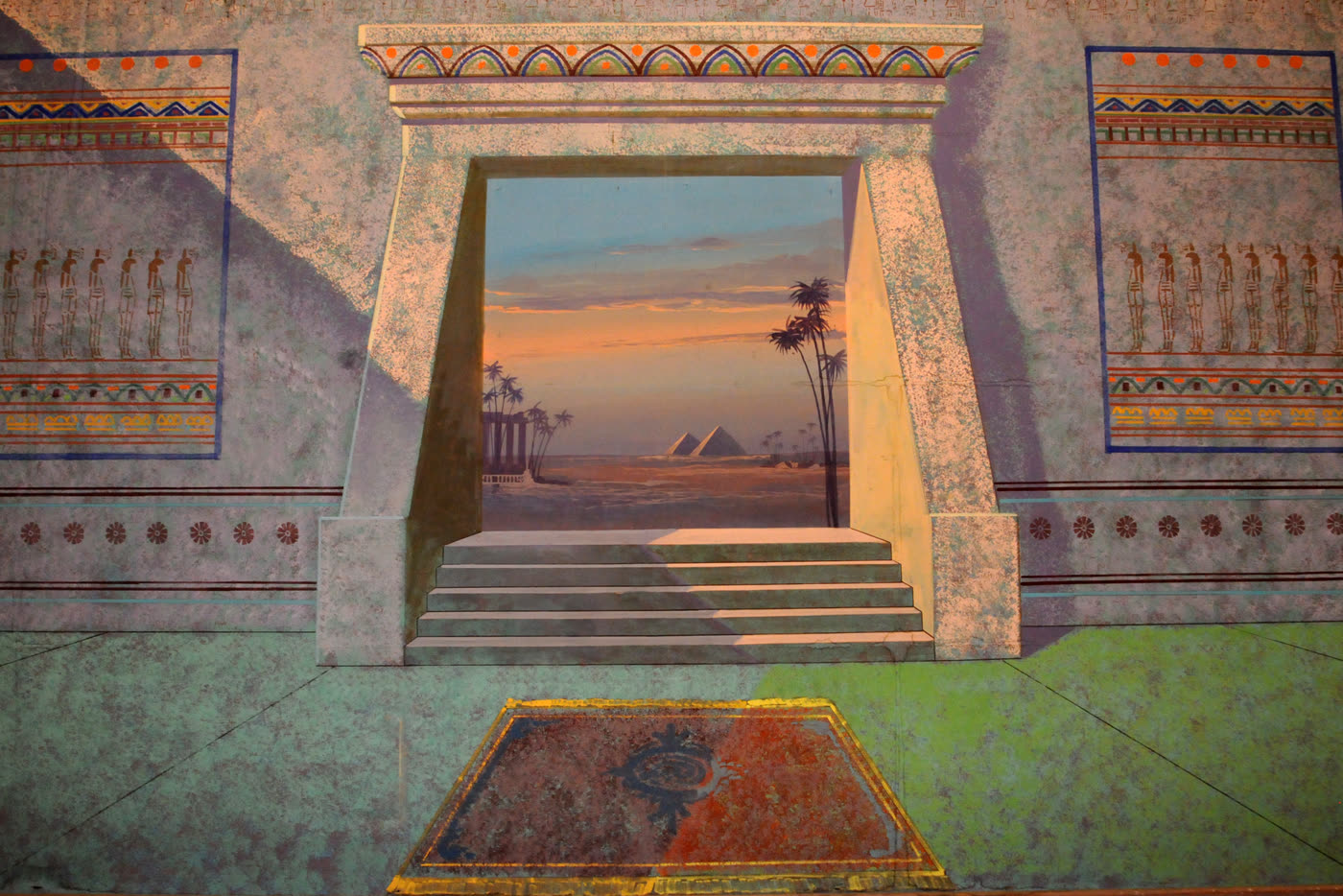
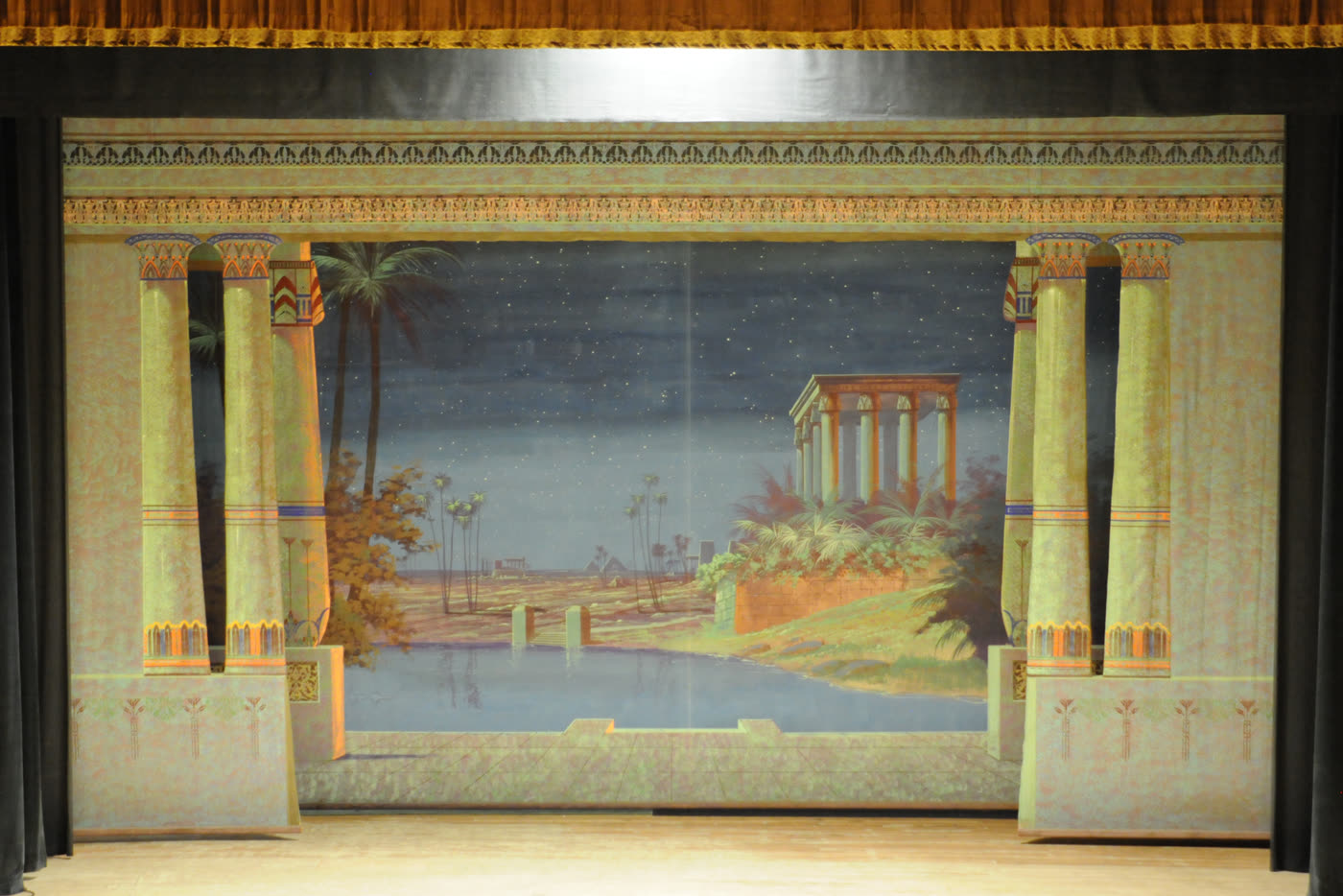
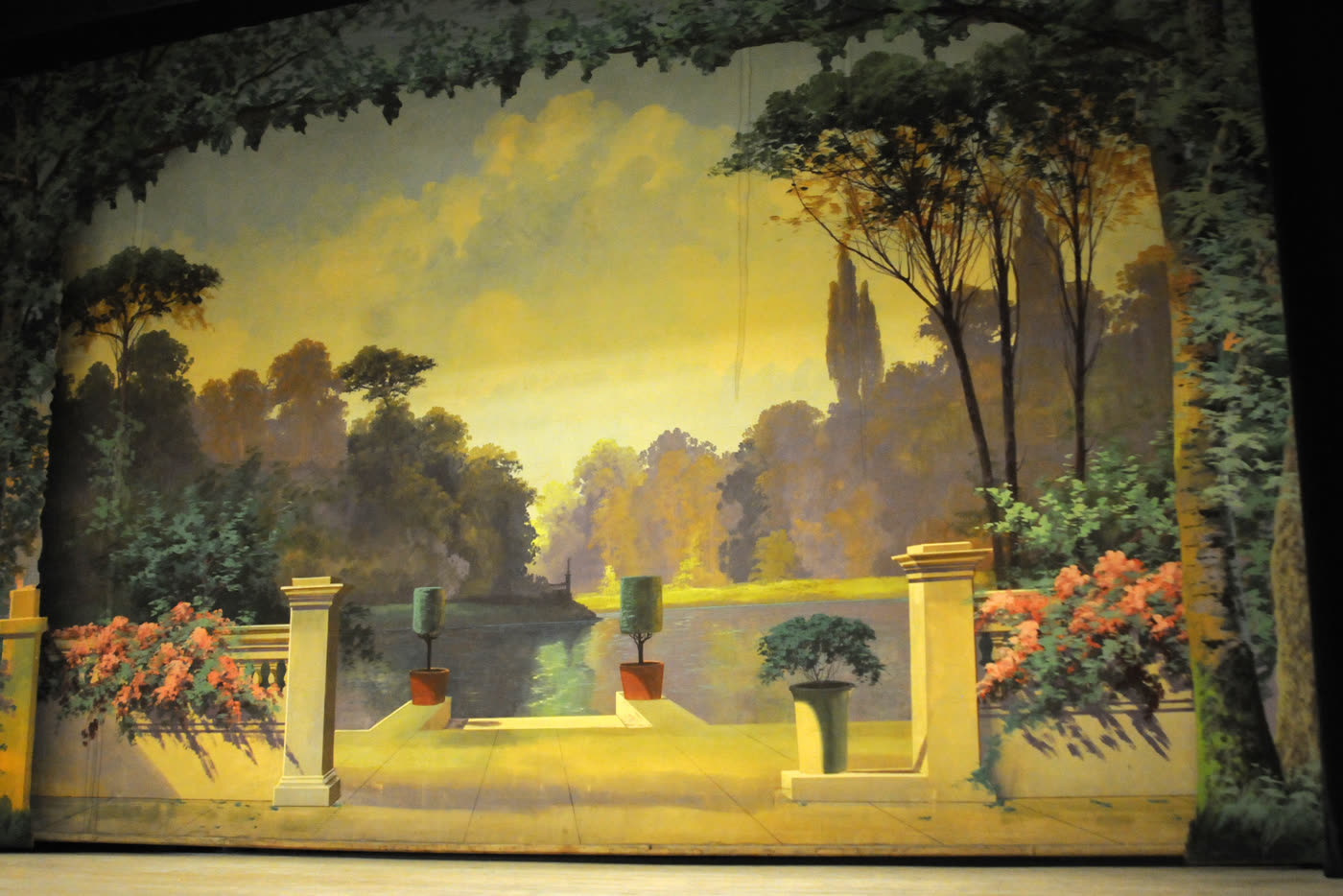
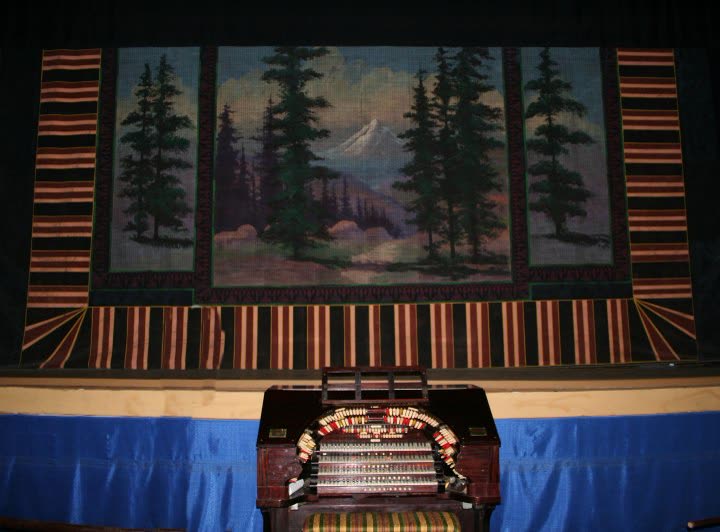
Carl Berg, a B. F. Shearer Company representative and an expert in Egyptian design, oversaw the interior decor. The Van Wie Scenery Company of Portland designed the curtains and the six sets of hand-painted scenic drops still hanging in the fly-loft: scenes of an Egyptian tomb, gardens, a terrace and forest, plus a more recent Mount Hood backdrop. The big gold main curtain is stained and torn; the original is believed to have been red velvet, and the ETPA is seeking grants to replace the curtain and its cracking rail.
In 2016, a rope holding part of a backdrop broke, with no injuries. In the summer of 2019, board members and volunteers restrung the drop ropes, added aircraft cable to the counterweights, and sewed and hung new legs. A 2025 structural evaluation of the fly loft found the wood rigging structure in good condition and identified the reinforcement needed to safely increase capacity for modern productions. That work is one more piece of the theatre’s next phase of restoration.
The hand-painted scenic drops
Six sets of scenic drops from the Van Wie Scenery Company of Portland still hang in the fly-loft above the stage. Four of them:
The Tour Ends Where It Began
Today the Egyptian is once again the vibrant community gathering place it was a century ago. A deed restriction bars showing commercially released movies less than five years old, but classics like Star Wars, The Goonies, and Gone with the Wind still draw crowds. Nonprofits rent the theatre for fundraiser movies, and weddings, concerts, town halls, comedy shows, and tours all help keep it running.
Guided tours can be arranged. If you would like a guide to walk you through the rooms above, please contact us to arrange one.
Interior and architectural photography by Allison Wasson Photography.
Come see it in person
Photos only go so far. Catch a film, a concert, or a Wednesday organ concert, or help keep the pharaohs standing for the next hundred years.